A failed fire certification inspection rarely comes down to one obvious fault. More often, it is the accumulation of small, unmanaged issues: a fire door that does not close, unsealed service penetrations, incomplete records, or work completed without evidence. Knowing how to prepare for fire certification means getting control of those details before an assessor, regulator, insurer or client asks difficult questions.
For duty holders, preparation is not paperwork for paperwork’s sake. It is the practical process of proving that the building is protected, its occupants can escape, and known defects are being managed properly. Get it right and certification becomes a clear, defensible outcome rather than a last-minute scramble.
Start by defining the certification you need
There is no single certificate that confirms every aspect of fire safety in a building. The right preparation depends on the premises, the work carried out and the compliance question being asked. You may need evidence relating to fire doors, fire stopping, alarm systems, emergency lighting, fire risk assessments, compartmentation surveys or completed remedial works.
This distinction matters. A fire door inspection report, for example, identifies the condition and performance issues of doorsets. A certificate for remedial work should demonstrate what was repaired, where it was repaired, what materials were used and who completed the work. Treating these as interchangeable can leave a serious gap in your compliance file.
Before booking an assessment, establish the scope. Consider the building type, occupancy, sleeping risk, height, vulnerable occupants and any recent alterations. A care home, school, hospital, block of flats and warehouse may all require a different level of investigation and evidence. If the scope is unclear, an early specialist survey is safer than assuming a generic inspection will cover it.
How to prepare for fire certification: inspect before you certify
Do not wait for the formal inspection to reveal the condition of your building. A pre-certification survey gives you time to find defects, prioritise them by risk and complete remedial work without disrupting residents, pupils, patients or operations at short notice.
Start with the elements that protect escape routes and prevent fire and smoke spreading between compartments. These failures are often hidden in plain sight, particularly in older buildings, buildings that have been refurbished repeatedly, or properties where several contractors have worked over time.
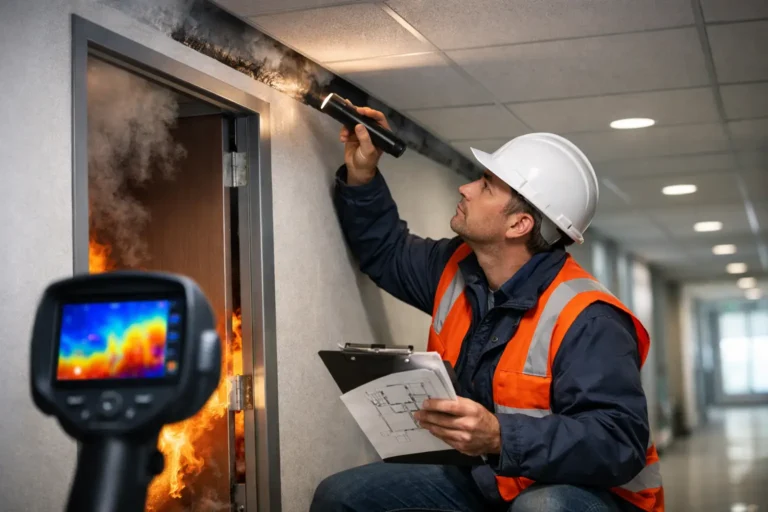
Pay close attention to fire doors. A compliant fire door is a complete, correctly fitted doorset, not simply a door with a fire-resistance label. Check that doors close fully into the frame, intumescent and smoke seals are present and undamaged, hinges and closers operate correctly, glazing is suitable, and gaps are within acceptable tolerances. Wedged-open doors, damaged leaves and poorly adjusted closers should be dealt with promptly, not noted for later.
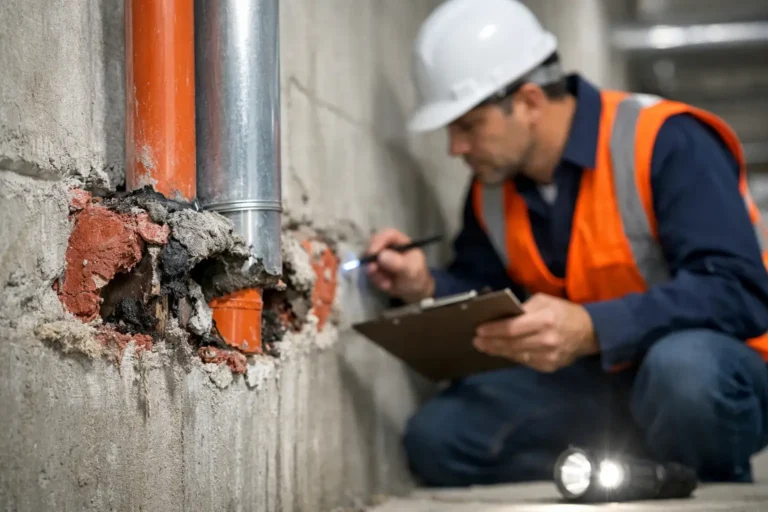
Fire stopping needs equally close scrutiny. Cable trays, pipes, ducts and other services passing through fire-resisting walls and floors must be sealed with suitable tested systems. Expanding foam, loose mineral wool, missing collars and unprotected openings around services are common reasons for failure. The concern is not cosmetic. A compromised compartment line can allow fire and smoke to bypass the very barriers designed to contain it.
Build the evidence file before anyone asks for it
A building can be safer than it was last month and still be difficult to certify if the evidence is missing. Documentation must show what was found, what was done and why the work can be relied upon.
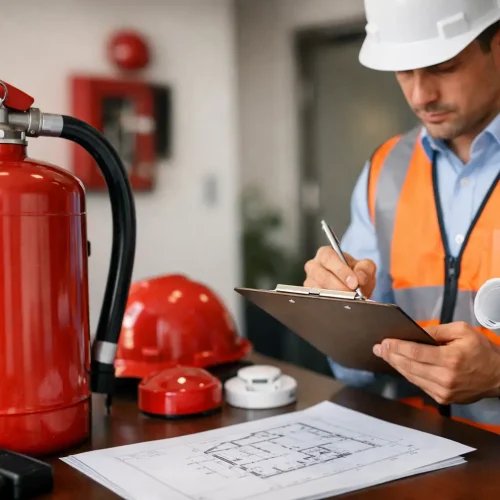
Your compliance file should be organised, current and easy for the Responsible Person or building manager to retrieve. It will usually need the following:
- A current fire risk assessment, including actions, responsibilities and review dates
- Recent inspection reports for fire doors, fire stopping and other relevant passive fire protection measures
- Clear remedial records, with location references, photographs and descriptions of the defects corrected
- Certificates, product information, installation details and competency records relevant to completed work
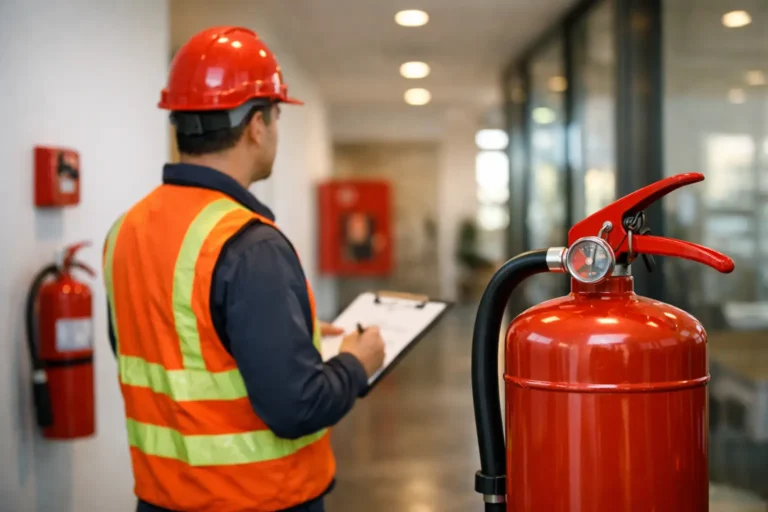
- Routine maintenance and testing records for systems such as alarms, emergency lighting and extinguishers
The exact records required depend on the work and building. However, the principle is consistent: evidence must be traceable. A vague invoice saying “fire safety works completed” is not a reliable substitute for a properly documented record of the materials, locations and scope of work.
Photographs are particularly valuable where remedial work will later be concealed. Before-and-after images, labelled by floor, room or door reference, provide a practical audit trail. They also help future contractors avoid damaging compliant fire stopping during maintenance or refurbishment.
Prioritise defects by life safety, not convenience
Not every issue carries the same urgency. A missing fire door closer on a protected escape route demands faster action than a minor finish defect in a low-risk area. The aim is not to create an endless snagging list. It is to make proportionate decisions that protect occupants and demonstrate responsible management.
Critical defects should be controlled immediately. This may mean restricting use of an area, installing temporary measures where appropriate, increasing patrols, repairing or replacing a door, or carrying out urgent fire stopping. Do not allow operational inconvenience to become the reason a known life-safety defect remains open.
For lower-risk items, set a clear completion date, assign ownership and retain proof of closure. Open actions without deadlines can look like unmanaged risk, particularly where the same issues appear repeatedly across inspection reports.
Make sure remedial work is certifiable work
This is where many premises lose confidence. A defect may have been repaired, but was it repaired using a suitable system, installed correctly, and recorded well enough to stand up to scrutiny?
Fire protection work is not an area for guesswork or general building repairs. A fire door repair can affect the performance of the whole doorset. Fire stopping products are only effective when used in the tested application for which they are intended. Substituting materials, leaving gaps around services or failing to identify the penetration type can invalidate the intended protection.
Use competent specialists who understand both the defect and the required evidence. Ask for a clear scope of works before work starts, then ensure the completion record aligns with it. If works are carried out in phases, maintain a live schedule showing what is complete, what remains open and what risk controls are in place in the meantime.
Check the people and management controls
Certification is not only about physical barriers. Inspectors may also look at how fire safety is managed day to day. Staff and site teams need to understand the measures that keep the building safe.
Make sure fire doors are not routinely obstructed, escape routes are clear, storage is not blocking electrical cupboards or stairwells, and reported defects have a defined route for escalation. In occupied residential buildings, clear communication with residents can reduce the risk of doors being altered, wedged open or damaged without management knowing.
Training records, evacuation arrangements and testing logs should reflect the building as it operates now. If layouts, occupancy or use have changed, old procedures may no longer be adequate. This is especially relevant after conversion works, extensions, changes in tenant mix or an increase in vulnerable occupants.
Prepare the building for assessment day
A professional assessment should be straightforward, but access issues can waste time and leave parts of the building unverified. Arrange access to plant rooms, risers, roof voids, service cupboards, communal areas and representative flats or rooms where necessary. Notify occupiers early and make sure a knowledgeable site contact is available.
Have your documentation ready in one place rather than searching through emails while the assessor waits. Be open about known defects and work in progress. Trying to hide an issue creates greater concern than showing that it has been identified, risk-assessed and is being actively resolved.
If the building is large or complex, agree the inspection scope in advance. Sampling may be appropriate in some circumstances, but it must be sufficient to give meaningful assurance. Where previous works are poorly documented or widespread defects are suspected, a more detailed survey may be the sensible route.
Treat certification as a controlled process, not a finish line
A certificate records a position at a point in time. Buildings change. Doors are damaged, services are added, tenants alter spaces and maintenance teams open up walls and ceilings. Without routine inspections and disciplined change control, a compliant building can quickly develop hidden weaknesses.
Set review dates, keep records live and inspect affected areas after any intrusive works. When a contractor creates a new penetration through a compartment wall, the fire stopping requirement should be part of the job scope from the beginning, not an afterthought once the work is complete.
For duty holders under pressure, the most reliable route is an end-to-end approach: identify the gaps, correct them properly, document every stage and secure clear sign-off. FireBlocked365 helps clients turn that process into an organised, practical plan rather than a compliance crisis.
The best time to prepare is before an inspection date forces the issue. When your building, records and remedial evidence tell the same clear story, certification becomes proof of control – and your occupants, organisation and reputation are better protected.