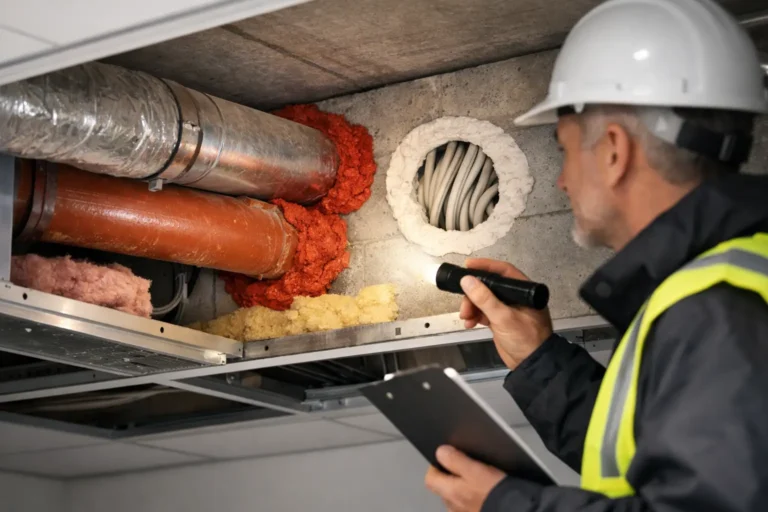
A fire door can look fine at a glance and still fail where it matters. A missing seal, an incorrect gap, a damaged closer or an undocumented repair can leave you exposed long before an inspector arrives. That is why knowing how to document fire door compliance matters just as much as carrying out the checks themselves. If the record is incomplete, unclear or impossible to verify, you have a compliance problem even if the door has been inspected.
Why documentation is where compliance is won or lost
Duty holders are under pressure from every side – residents, staff, insurers, regulators and senior leadership. In that environment, vague notes and scattered photographs are not enough. You need a record that proves what was checked, what was found, what was done, who did it and when it was signed off.
This is where many buildings fall short. The inspection may happen, but the evidence trail does not. A caretaker makes a note in a diary. A contractor sends over a few photos. Someone files a certificate in the wrong folder. Months later, when there is a fire risk assessment review, an audit or an incident, no one can show a clear chain of compliance.
Good documentation removes that uncertainty. It gives you something defensible. It also makes remedial work easier to prioritise because defects are recorded consistently, not passed around as verbal concerns.
How to document fire door compliance properly
The most reliable approach is to treat each fire door as an individual asset, not part of a general comment such as “doors checked on level 2”. Each door should be identifiable by location and reference number so there is no confusion later. In a school, that might mean linking the door to a block, corridor and room. In a care home, it may need to tie to a bedroom number, cross-corridor position or protected escape route.
Your documentation should show the date of inspection, the person who carried it out, the inspection standard or checklist used, the condition of the door at the time, any defects found, the action required and the status of that action. If remedial works are completed, the record should then be updated with what was repaired or replaced, when it happened and who signed it off.
That sounds simple, but the quality of the detail matters. “Door damaged” is weak. “Intumescent strip missing from hinge edge, self-closing device not fully engaging leaf into frame, excessive gap at head” is useful. It tells the next person exactly what is wrong and gives you an auditable trail.
Start with a complete fire door register
If you do not already have a fire door register, that is the first issue to fix. You cannot document compliance consistently if you do not know how many fire doors you are responsible for, where they are and what type they are supposed to be.
A proper register should identify each door set or assembly, its location, its fire rating if known, its function and any critical ironmongery or glazing details that affect performance. Where labels, plugs or certification marks are present, these should be recorded. Where they are missing, that should also be noted rather than guessed.
This register becomes the backbone of your documentation. Every inspection, defect note, remedial action and certificate should point back to it.
Record what was checked, not just the outcome
One of the most common mistakes is only recording a pass or fail result. That may look tidy on a spreadsheet, but it will not stand up well to scrutiny if someone asks what was actually examined.
Your records should show the components reviewed during inspection. Depending on the door and the premises, that may include the leaf and frame condition, gaps and alignment, hinges, closers, latches, smoke seals, intumescent seals, glazing, signage, hold-open devices and any visible unauthorised alterations.
This matters because a fire door does not fail as one single item. It fails in parts. If the documentation only says “fail”, you lose the technical reason and weaken your ability to prove that the issue was properly understood and addressed.
What evidence should sit behind the record
Written findings are essential, but they should not stand alone. The strongest compliance files combine written inspection records with supporting evidence that can be checked later.
Photographs are especially valuable when defects are present, when work is completed or when access conditions are difficult. A dated image of a missing seal before repair and a clear image after repair can save a great deal of argument later. The same applies to closer adjustments, glazing bead defects or damage caused by misuse.
Certificates and product information also have a place, but only where they are relevant and traceable. If a door set has been replaced, keep the documentation that supports its specification and installation. If ironmongery has been changed, record what product was fitted and whether it is suitable for the door assembly. Generic paperwork dumped in a compliance folder is not the same as evidence linked to a specific opening.
Make remedial actions easy to follow
Inspections identify problems. Documentation proves they were controlled. If your records stop at defect finding, you have only documented risk, not compliance.
Each non-conformance should have a clear action status. For example, raised for repair, temporarily controlled, replacement required, works completed or signed off pending reinspection. Dates matter here. So do responsibilities. If the door was condemned for use, that needs to be explicit. If temporary measures were put in place while parts were sourced, that should be recorded too.
This level of control is particularly important in occupied buildings where defects can sit in the system for weeks if no one owns them. Housing providers, schools and care settings cannot afford vague handovers. The paper trail has to show momentum from inspection through to resolution.
The difference between internal records and inspection-ready records
Some organisations keep notes that make sense internally but fail when viewed by an external assessor, enforcing authority or insurer. That is a dangerous gap.
An inspection-ready record is structured, legible and consistent. It does not rely on one member of staff remembering what a shorthand phrase meant six months ago. It should be possible for another competent person to review the file and understand the history of that door without explanation.
That means standardising language, using consistent door references and keeping version control over updated reports. If a defect was first noted in January, partially repaired in February and signed off in March, the record should show that sequence clearly. If different contractors have been involved, their roles should be visible.
Common documentation failures that create legal exposure
The biggest risk is not always that no one checked the door. Often, it is that the documentation cannot prove the check was suitable and sufficient.
Typical failures include missing locations, no photographic evidence, undated records, unclear defect descriptions, no evidence of sign-off after repairs, and certificates stored separately from the asset record. Another common issue is documenting a fire door as compliant after a visual walk-round without recording the actual inspection criteria used.
There is also the problem of drift. A building may have started with a strong set of records, then over time door replacements, refurbishments and ad hoc repairs were never folded back into the main compliance file. What you end up with is a register that no longer reflects the live building.
Who should be responsible for documenting fire door compliance
Responsibility should sit with a named person, even when inspections and repairs are outsourced. Contractors can carry out assessments and provide reports, but the duty holder still needs to ensure the records are complete, retained and acted on.
In practice, the strongest systems have one accountable point of control – often a responsible person, estates manager, compliance lead or building manager – supported by competent specialists. That prevents documentation from becoming fragmented across inboxes, paper files and disconnected contractor portals.
If you manage multiple sites, consistency becomes even more important. A standard format across schools, care homes, residential blocks or commercial premises makes it far easier to spot overdue actions and answer audit questions quickly.
When specialist support makes the difference
If your records are already inconsistent, trying to patch them manually can waste time and still leave gaps. In many cases, the safer route is to bring in a specialist who can assess the doors, document findings properly, carry out remedial works and provide the sign-off trail in one controlled process.
That is where an end-to-end compliance partner adds real value. Instead of separate surveys, separate contractors and separate paperwork, you get one line of sight from defect identification to documented completion. For busy duty holders, that reduces stress as much as it reduces risk.
FireBlocked365 works in exactly that way – identifying failures, fixing them quickly and providing the records needed to show that compliance has been taken seriously and managed properly.
Keep the record alive, not archived
Fire door compliance is not a one-off paperwork exercise. Doors are used every day, damaged in service, altered during maintenance and affected by changing occupancy. Documentation has to reflect that reality.
The aim is not to build the thickest folder. It is to maintain a live, reliable record that shows control. When your documentation is clear, current and backed by evidence, inspections become easier, remedial work becomes faster and your position is far stronger if your decisions are ever questioned.
If you are responsible for a building, the safest approach is simple: document every fire door as if you may need to defend that record later. Because one day, you might.