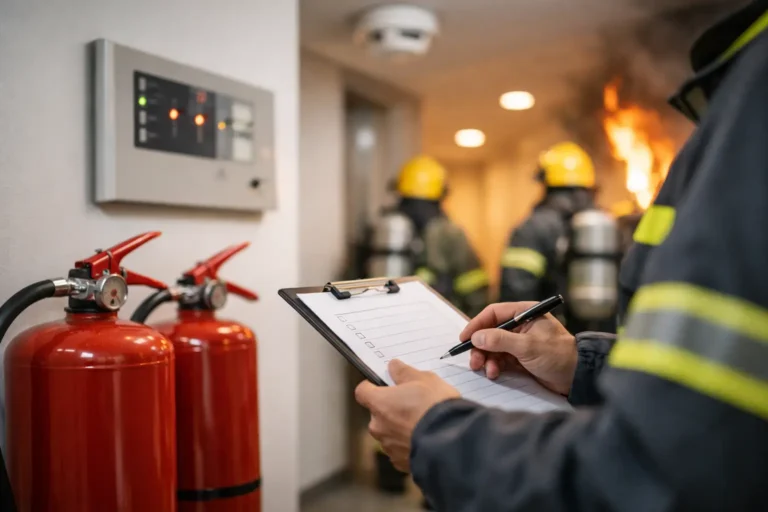
A building rarely fails a fire assessment because of one dramatic fault. More often, it fails because of small issues that have been missed, delayed, signed off badly, or never properly checked in the first place. That is why the top fire safety compliance mistakes are so dangerous. They create a false sense of security right up until an inspection, an incident, or a complaint exposes the gap.
For landlords, managing agents, school leaders, care providers and commercial duty holders, that gap is not just administrative. It can mean legal action, enforcement notices, insurance problems, reputational damage and, most seriously, people put at risk in an occupied building. The good news is that most compliance failures follow familiar patterns. Once you know where they happen, you can act before they become expensive.
The top fire safety compliance mistakes usually start with assumptions
One of the most common problems is assuming a building is compliant because work was done recently, a contractor attended last year, or there is paperwork somewhere on file. Fire safety does not work on assumption. It depends on current condition, competent inspection, documented findings and corrective action that stands up to scrutiny.
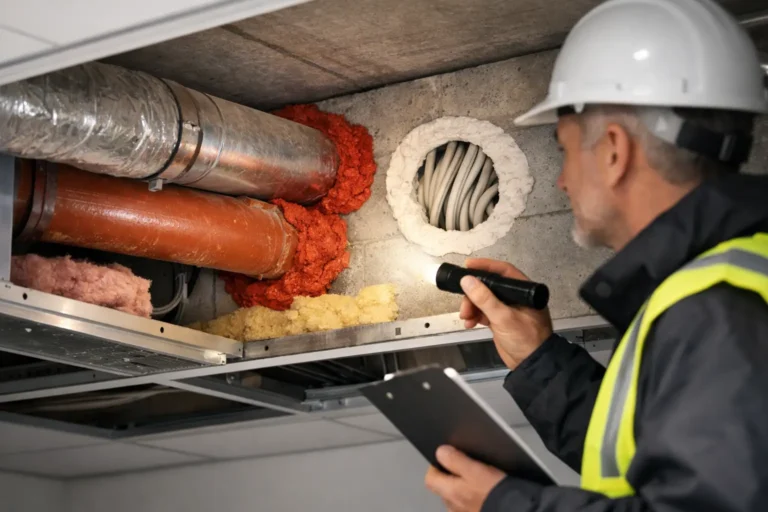
This is where many duty holders get caught out. A site may look fine on the surface, but failed fire stopping above ceilings, damaged fire doors, missing seals, unprotected service penetrations or poor maintenance records can sit unnoticed for months. Compliance is not about whether a building feels safe. It is about whether it can be evidenced.
1. Treating the fire risk assessment as the finish line
A fire risk assessment is essential, but it is only the starting point. One of the biggest mistakes is commissioning the assessment, filing the report, and assuming the job is done.
If the report identifies defects, management failures or remedial actions, those items need to be tracked and completed. Regulators and responsible persons are not judged on whether a report exists. They are judged on whether known risks were addressed in a reasonable timeframe.
It also depends on the quality of the assessment itself. A generic, rushed or vague report can leave major issues hidden. If recommendations are too broad, it becomes difficult to prioritise action or demonstrate progress. A useful assessment should make the next steps clear, practical and defensible.
2. Missing hidden fire stopping defects
Fire stopping failures are among the most serious and most overlooked compliance issues in regulated buildings. They are hidden behind risers, above suspended ceilings, inside service cupboards and around penetrations that have been altered over time.
The problem is simple. Buildings change. Electricians, plumbers, telecoms engineers and maintenance teams make new openings. If those penetrations are not properly sealed with suitable fire-stopping systems, compartmentation is breached. Smoke and fire can then travel far faster than the building design intended.
This is one of the top fire safety compliance mistakes because it is rarely visible to non-specialists. A site team may walk past a compliant-looking corridor every day without realising the compartment wall above it has been compromised. You cannot manage this risk through guesswork. It needs inspection, clear reporting and proper remedial work, not filler, foam or improvised patching.
3. Assuming fire doors are compliant because they close
If a fire door shuts, many people assume it is fine. That is a costly misunderstanding.
A compliant fire door set is not just a leaf on hinges. Its performance depends on the full assembly – frame, gaps, seals, ironmongery, glazing, closer, signage and condition. If any part is wrong, damaged, poorly fitted or altered, the door may fail when it is needed most.
Common examples include excessive gaps, damaged intumescent strips, missing smoke seals, unsuitable hinges, poor alignment, broken closers and unapproved modifications after installation. In occupied buildings, wear and tear is constant. Doors in schools, care homes, hospitals and multi-occupancy blocks take daily impact. Without regular specialist checks, defects build up quietly.
The trade-off here is speed versus certainty. Quick visual checks by on-site teams are useful, but they do not replace a detailed assessment where compliance matters and liability sits with the duty holder.
4. Using general contractors for specialist compliance work
Not all building contractors are fire compliance specialists. That distinction matters more than many clients realise.
A contractor may be excellent at general maintenance and still not understand the tolerances, products, installation methods and evidence requirements involved in fire doors or fire stopping. The result is often remedial work that looks acceptable but does not meet the required standard.
This creates a double cost. First, you pay for work that does not solve the issue. Then you pay again when a competent specialist identifies failures and has to correct them. Worse still, the building may remain exposed in the meantime.
For duty holders under pressure, the temptation is to use whoever is available quickly. Sometimes urgency is real. But urgent work still needs to be competent, documented and certifiable. Fast is only useful if it is also right.
5. Poor record keeping and weak audit trails
A surprising number of buildings have carried out some of the right actions but cannot prove it. When records are incomplete, scattered or inconsistent, compliance becomes hard to defend.
If an assessor, insurer or enforcing authority asks what defects were found, when they were rectified, who carried out the work and what standard was applied, vague answers are a risk in themselves. Good intentions do not pass audits.
This is especially common across larger estates, older buildings and organisations with multiple decision-makers. A survey may sit with one team, quotes with another, remedials with a contractor, and sign-off nowhere obvious at all. The practical answer is centralised reporting, clear action tracking and formal certification where required.
Good documentation also helps operationally. It reduces duplication, shortens decision-making and gives senior stakeholders confidence that issues are under control rather than drifting between departments.
6. Delaying remedial works because the building is still occupied
Occupied premises create real constraints. Schools cannot easily shut classrooms. Care homes must protect vulnerable residents. Commercial buildings have tenants, schedules and business continuity pressures. Because of that, essential remedial works are often pushed back again and again.
The problem is that occupancy does not reduce legal responsibility. In many cases, it increases it.
There is always a balance to strike between disruption and urgency. Not every defect carries the same level of immediate risk, and sensible phasing may be appropriate. But delay needs to be an active, managed decision based on priority and evidence – not passive avoidance because the work is inconvenient.
A specialist provider should help plan around the building, not simply add pressure. That means identifying what must be dealt with now, what can be programmed, and how work can be completed with minimal interruption while still restoring compliance properly.
7. Waiting for enforcement, complaint or failure before acting
The most expensive compliance strategy is waiting until someone else forces the issue.
By that stage, the defects are rarely smaller. Costs are usually higher, internal pressure is sharper and confidence is lower. What could have been handled through planned surveys and orderly remedials becomes a high-pressure response to enforcement action, failed inspection results, resident complaints or insurance concern.
This is where anxiety rises quickly for responsible persons. They know they should have certainty, but instead they have fragmented information and a deadline. That is exactly why early intervention matters. A proper compliance partner does not just identify faults. They turn uncertainty into a clear sequence of survey, action, evidence and sign-off.
How to avoid the top fire safety compliance mistakes
The strongest approach is straightforward. Do not rely on assumptions, generic reports or visual reassurance. Get the right areas inspected by competent specialists. Prioritise defects based on actual risk. Complete remedial works to the correct standard. Keep the paperwork clear, accessible and current.
If you manage more than one building, consistency is just as important as speed. The same inspection standard, reporting format and evidence trail across your estate makes it far easier to identify recurring issues and prove control. That matters whether you are responsible for a single care home or a portfolio of residential blocks.
For many duty holders, the real value is not just technical. It is the relief of knowing the problem has been properly identified, properly fixed and properly documented. That confidence is what allows you to face inspections, reassure stakeholders and protect the people inside your building.
If there is any doubt around fire doors, compartmentation, remedial works or certification, deal with it while you still have options. Fire safety compliance becomes far more manageable the moment you stop treating it as a paperwork exercise and start managing it as a live operational risk.