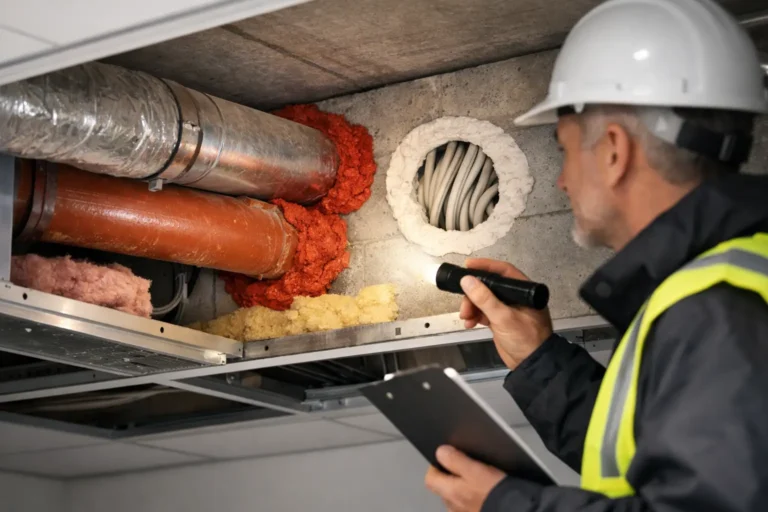
A failed fire door is not a paperwork problem. It is a live safety risk sitting in a corridor, stairwell or flat entrance, often in full daily use, while the responsible person carries the liability for it. If you are asking how to fix failed fire doors, the first priority is to stop treating the issue as cosmetic. A fire door only does its job if the entire doorset performs as tested and intended.
That matters because many failures are hidden in plain sight. A door can look solid enough to staff, residents or site teams and still fail inspection on the details that control smoke spread, fire resistance and self-closing performance. When a fire door fails, it can put lives at risk, expose you to enforcement action, and undermine the wider fire strategy of the building.
How to fix failed fire doors without making things worse
The first rule is simple. Do not let a general maintenance mindset drive fire door repairs. Fire doors are not standard joinery items, and patch repairs done without product knowledge can create a bigger compliance problem than the original defect.
A proper fix starts with identifying exactly why the door failed. That usually means looking at the full assembly rather than one visible defect. The leaf, frame, hinges, intumescent seals, smoke seals, glazing, closer, latch and gaps all work together. If one component is wrong, damaged, missing or incompatible, the whole door can fail.
This is where many duty holders lose time and money. They replace a closer, trim the edge, swap a lock or repaint over seals, then assume the issue is resolved. At the next inspection, the same opening fails again because the original root cause was never properly assessed.
What usually causes a fire door to fail
Most failed fire doors do not fail for one dramatic reason. They fail because of wear, poor installation, unsuitable repairs, or lack of planned maintenance over time.
Excessive perimeter gaps are one of the most common issues. If the gaps around the leaf are too large or uneven, the door may not hold back fire and smoke as required. A damaged or distorted frame can cause the same problem. In some cases the leaf has been cut down to fit after installation, which can invalidate the door if it exceeds manufacturer tolerances.
Missing, painted-over or broken intumescent and smoke seals are another frequent cause. These seals are not optional extras. They are part of the door’s tested performance. If they have been removed, replaced with the wrong type, or damaged by repeated use, the door may no longer achieve the protection the building relies on.
Ironmongery also matters more than many site teams realise. Hinges must be the correct type, quantity and condition. Closers must fully close the door from any open position. Latches need to engage properly. Glazed panels and vision panels must use fire-rated glass and compatible glazing systems. A single non-compliant component can be enough to fail the opening.
Then there is damage from day-to-day occupation. Impact from trolleys, wheelchairs, beds, moving furniture and repeated slamming is common in schools, care settings, hospitals and residential blocks. A small split, hole or delaminated edge may look minor, but whether it can be repaired depends on the door specification, the extent of the damage and the repair method used.
Repair or replace? It depends on the failure
This is the question every responsible person asks, and the honest answer is that it depends on the door, the defect and the evidence available.
Some failed fire doors can be repaired safely and cost-effectively. Typical examples include replacing defective self-closers, renewing suitable hinges, installing like-for-like compliant seals, adjusting minor alignment issues, or dealing with fixable frame defects. If the underlying doorset remains sound and the remedial work follows the manufacturer’s scope and recognised fire door standards, repair may be the right route.
Other doors should not be repaired beyond a certain point. If the leaf is badly damaged, excessively altered, uncertified, incompatible with the frame, or fitted with unknown components, replacement is usually the safer option. The same applies where repeated piecemeal repairs have left no clear line of evidence that the door can still perform as intended.
That judgement should never be based on guesswork. A cheap repair that fails again, or cannot be justified to an assessor, often costs more than replacing the opening correctly the first time.
The right process for fixing failed fire doors
If you need to know how to fix failed fire doors properly, the process should be controlled from assessment through to sign-off.
1. Get the door assessed in detail
Start with a competent inspection. You need more than a note saying the door has failed. You need a clear record of what failed, where, how serious it is, and whether repair is acceptable or replacement is required. That report should give you a practical basis for action, not vague observations.
2. Prioritise higher-risk openings
Not every failed door carries the same level of immediate risk. Flat entrance doors, stair enclosure doors, plant room doors, riser cupboard doors and doors protecting escape routes should be dealt with quickly. In occupied buildings, especially where residents sleep, vulnerability and evacuation strategy matter.
3. Match remedial works to the tested doorset
Any replacement components must be suitable for that door assembly. This is where unplanned maintenance can go badly wrong. Fitting an off-the-shelf closer or seal without checking compatibility may leave you with a door that still fails. Fire door repairs should follow tested evidence, manufacturer guidance and accepted installation practice.
4. Carry out the work with minimal disruption but no shortcuts
In schools, care homes, hospitals and residential blocks, access and continuity matter. Repairs need to be organised efficiently, but speed must not come at the cost of compliance. A rushed repair that cannot be evidenced is not a solution.
5. Reinspect and document the result
Once works are complete, the door should be checked again and the outcome recorded. This protects you if insurers, auditors, regulators or internal governance teams ask what was found and how it was resolved. Without a documented trail, you may still struggle to prove compliance even after spending money on remedial works.
Common mistakes when trying to fix failed fire doors
The most expensive mistake is treating visible defects only. Replacing one faulty item without checking the whole opening often leaves hidden failures untouched.
Another common error is using a handyman or general contractor with no fire door competence. Good intentions are not enough here. If they cannot evidence that the repair is suitable for the door’s fire performance, you are still exposed.
It is also risky to delay action because the door still opens and closes. A door can function in everyday use and still fail badly in a fire. Compliance failures rarely improve with time. They usually worsen, especially in high-traffic areas.
Finally, many duty holders underestimate the value of documentation. If a repair is done but not recorded properly, the practical result may be fine while the compliance position remains weak. For regulated buildings, that gap matters.
Why specialist support matters
Fire door failures sit at the point where life safety, legal duty and building operations all meet. That is why the fix needs to be more than technical. It needs to be defensible, prompt and managed in a way that reduces pressure on the responsible person.
A specialist provider should be able to identify the failure, explain it in plain English, complete the right remedial work, and provide the evidence you need afterwards. That saves time, avoids repeated failed inspections and gives you clearer control over your risk position. For duty holders already under pressure from residents, governors, boards, insurers or enforcement concerns, that certainty matters as much as the repair itself.
At FireBlocked365, that is exactly how we approach failed fire doors – fast assessment, practical remedial action and documented sign-off that stands up to scrutiny.
How to fix failed fire doors and stay compliant after the repair
Fixing the immediate failure is only part of the job. The longer-term protection comes from making sure doors are inspected and maintained before defects become critical.
That usually means planned checks, prompt reporting of damage, better control over third-party alterations and a clear process for remedial works. In occupied buildings, especially those with heavy traffic or vulnerable residents, fire doors need ongoing attention. Waiting for the next full assessment is often too late.
If you are responsible for a building with failed fire doors, the safest move is not to patch and hope. It is to get a competent assessment, act on the findings, and make sure every repair can be evidenced. When a fire door fails, people and compliance are both on the line. The right fix restores more than the door – it restores control.