A care home can look calm on the surface while serious fire safety failures sit unnoticed behind bedroom doors, above ceilings or inside service risers. That is why care home fire risk assessment requirements matter so much. In this setting, a missed defect is not just a paperwork problem. It can put sleeping, vulnerable residents and the staff supporting them in immediate danger.
Care homes face a higher level of scrutiny for good reason. Many residents need assistance to move, may have impaired hearing or cognition, and may not react quickly in an emergency. That changes the standard expected from the responsible person. A generic fire risk assessment is rarely enough. It needs to reflect the building, the residents, the staffing model and the reality of evacuation in a live care environment.
What the law expects from care homes
Under the Regulatory Reform (Fire Safety) Order 2005, the responsible person must carry out a suitable and sufficient fire risk assessment and act on its findings. In a care home, that duty is broader than simply filling out a form once a year. It means identifying fire hazards, understanding who is at risk, reducing those risks where possible and maintaining the precautions that protect life.
For care home operators, managers and owners, the pressure is real. If an inspection finds weak assessment records, poor compartmentation, non-compliant fire doors or evacuation plans that do not reflect resident dependency, the consequences can move quickly from enforcement to prosecution. Insurers may also take a harder line where known risks have not been addressed.
The legal requirement is for the assessment to be recorded where five or more people are employed, but in practice every care home should have a documented assessment supported by clear evidence, action tracking and review dates. In a regulated care setting, undocumented compliance is very close to no compliance at all.
Care home fire risk assessment requirements in practice
The phrase care home fire risk assessment requirements covers more than a checklist. The assessment must be specific to the premises and the people inside it. A converted house used as a small residential care home has very different risks from a purpose-built nursing home with multiple floors, oxygen use, bariatric residents and night staffing pressures.
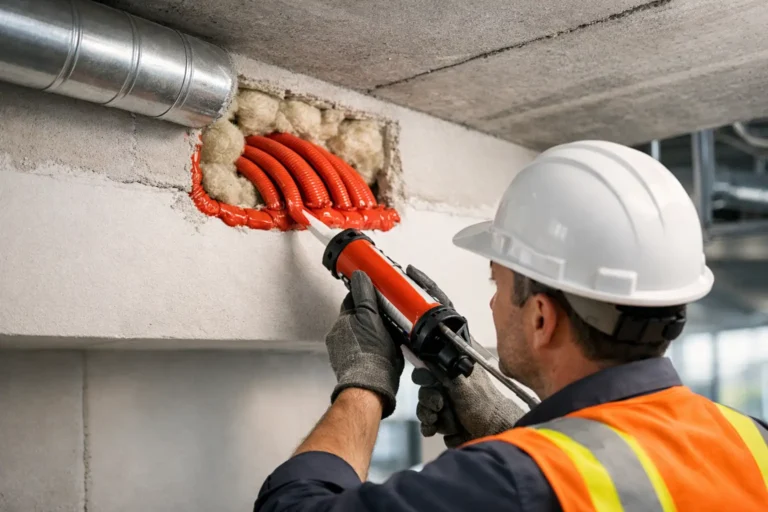
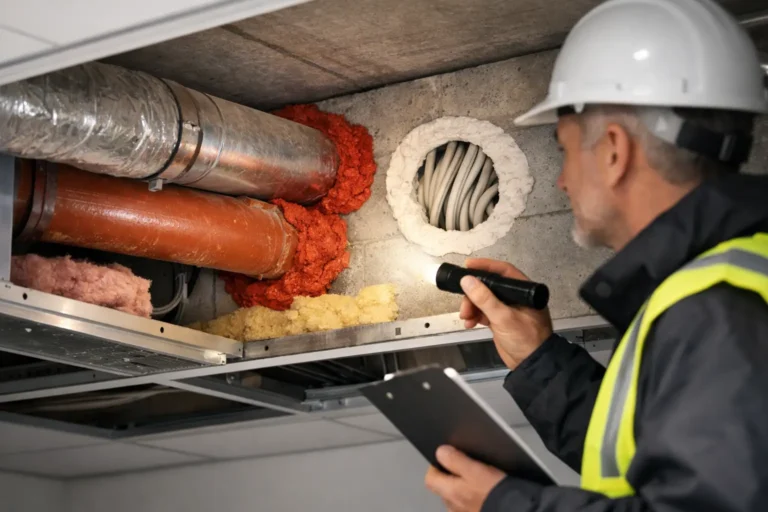
A suitable assessment should examine ignition sources such as electrical equipment, laundry areas, kitchens, smoking arrangements and contractor activities. It should also consider fuel sources including furnishings, bedding, stored items and waste management. Just as important is the spread of fire and smoke. In many care homes, the biggest hidden failures are not obvious housekeeping issues but breaches in fire stopping, damaged compartment walls, ill-fitting doors and unsealed service penetrations.
This is where many duty holders get caught out. The building may appear compliant day to day, yet the passive fire protection has been undermined over time by maintenance works, cabling changes or poor repairs. If compartmentation fails, a progressive horizontal evacuation strategy can collapse under real conditions.
The people at risk must sit at the centre
In most commercial buildings, a fire risk assessment focuses heavily on escape routes and alarm systems. In care homes, that is only part of the picture. The residents themselves are the central issue.
A proper assessment must account for mobility, cognition, medication, sensory impairment and the likelihood that some residents will be asleep when a fire starts. It should also reflect whether residents can self-evacuate, need prompting, require one-to-one assistance or depend on equipment to move safely. That affects staffing levels, evacuation timing and personal emergency evacuation planning.
There is a practical tension here. Care homes are homes first, not institutions, and operators rightly want them to feel comfortable and dignified. But soft furnishings, personal possessions, mobility scooters, charging equipment and open communal layouts can all increase fire risk. Good assessment work does not ignore that tension. It manages it with clear control measures that preserve daily life without gambling with safety.
What a suitable and sufficient assessment should cover
The strongest assessments do not stop at broad statements such as fire alarm present or staff trained. They test whether fire safety measures are actually effective.
That means checking fire doors for correct fit, self-closing action, damage, glazing, seals and gaps. It means reviewing escape routes to confirm they are usable in practice, not just on a drawing. It means examining whether alarm coverage suits the dependency level of residents and whether detection is appropriate in high-risk rooms. Emergency lighting, extinguishers, signage and staff drills all matter, but they should be seen as part of a wider system rather than isolated boxes to tick.
Compartmentation deserves particular attention in care environments. Many evacuation strategies rely on moving residents to adjoining safe compartments rather than straight outside. If walls, ceilings, risers and doors cannot hold back fire and smoke for the required period, the entire strategy is weakened. That is why survey detail matters. A superficial inspection may reassure no one when regulators, coroners or insurers ask harder questions later.
Care home fire risk assessment requirements and evacuation
Evacuation planning is where care home fire risk assessment requirements become operational rather than theoretical. In a care home, the question is not only whether there is a means of escape. It is whether residents can actually be moved to safety, by the staff available, at the time a fire might occur.
Most care homes use phased or progressive horizontal evacuation rather than immediate full evacuation. That can be appropriate, but only if the building supports it and the staff understand it. The assessment should test whether night staffing is enough, whether evacuation aids are available and maintained, whether staff know who needs assistance and whether refuge or compartment arrangements are realistic.
This is often where off-the-shelf assessments fail. They may describe a generic evacuation plan without properly accounting for the dependency profile of current residents. In care settings, that gap is serious. Resident needs change. Admissions change. Staffing patterns change. The assessment has to keep up.
How often should a care home review its fire risk assessment?
The law does not prescribe a single fixed review period for every premises, but waiting passively for the next annual date is risky. A care home fire risk assessment should be reviewed regularly and whenever there is reason to suspect it is no longer valid.
That includes building alterations, internal layout changes, increases in resident dependency, changes in use of rooms, serious maintenance issues, fire incidents, near misses, enforcement action or significant staffing changes. Even smaller works can create bigger compliance failures than expected. Something as routine as a contractor installing new services can breach fire-resisting walls or leave doors unable to close properly.
The safest approach is active review, not calendar-driven complacency. If the building, the people or the fire precautions have changed, the assessment should change too.
Common failures that cause care homes to fail scrutiny
In our experience, the most damaging failures are often the ones duty holders assumed were being managed by someone else. The assessment is in place, but the action plan has stalled. Fire doors were noted months ago, but no remedial work followed. Staff have had training, but drills do not reflect dependent residents. Compartmentation has never been properly checked above ceiling level. Records exist, yet they are too vague to stand up to inspection.
Another common problem is relying on a generalist assessment where a higher-risk care setting needs deeper technical understanding. A decent-looking report can still miss the defects that matter most. That creates a false sense of security, which is more dangerous than an obvious gap because it delays corrective action.
For operators, the key point is simple. Inspectors do not judge intent. They judge condition, evidence and management control. If your documents say one thing and the building shows another, you are exposed.
Turning requirements into real compliance
The right approach is to treat the fire risk assessment as the starting point for control, not the end of the process. Once issues are identified, they need to be prioritised, costed, repaired and signed off clearly. That may involve fire door remediation, fire stopping works, improved documentation, updated evacuation plans or a more detailed survey of hidden building elements.
This is where specialist support can make the difference between recurring anxiety and confident compliance. FireBlocked365 works with duty holders who need more than a report. They need clarity on what is wrong, what is urgent, what can wait and what must be fixed properly to protect residents and satisfy scrutiny.
A care home is one of the hardest environments to get wrong and one of the most important to get right. If your current assessment feels generic, out of date or disconnected from the condition of the building, that is your warning sign. Better to act while you still have control than to explain later why the risk was left in place.
The safest care homes are not always the newest or the most polished. They are the ones where responsibility is taken seriously, defects are not left to drift and compliance is treated as a live duty every single day.