A fire door in a communal corridor can look perfectly serviceable and still fail when it matters. A gap that is too wide, a closer that does not fully shut the leaf, a damaged seal, an unapproved glazed panel – these are the kind of faults that turn a compliance issue into a life safety risk. That is why communal area fire door regulations matter so much for landlords, managing agents, housing providers and anyone responsible for occupied buildings.
If you are the responsible person or duty holder, this is not a minor maintenance task. Fire doors in communal areas are part of your building’s compartmentation strategy. When they fail, smoke and fire can spread faster through escape routes, put residents and staff at risk, and leave you exposed to enforcement action, insurance problems and difficult questions after an incident.
What communal area fire door regulations are really trying to achieve
The point of a fire door is simple. It is there to hold back fire and smoke long enough to protect escape routes and support evacuation or stay-put strategies, depending on the building design. In communal areas, that role becomes even more critical because these doors often protect the shared spaces that everyone relies on.
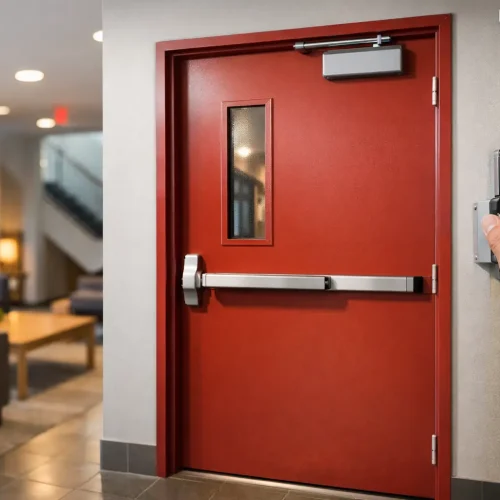
In practice, communal area fire door regulations are not just about whether a door is labelled as a fire door. They are about whether the complete doorset performs as intended in the real building, in its actual condition, with its ironmongery, frame, seals and closing device all working together.
That distinction catches many duty holders out. A door may have been compliant when installed, but years of wear, poor repairs, new flooring, overpainting, unauthorised alterations or heavy daily use can change that quickly. Compliance is not a one-off event. It needs to be checked, recorded and maintained.
Which buildings need close attention
Communal area fire door regulations are especially relevant in multi-occupied residential buildings, including blocks of flats, sheltered housing and mixed-use premises with shared escape routes. They also matter in schools, care settings, hospitals and commercial buildings where corridors, lobbies and stair enclosures must be protected.
The exact duties can vary depending on the building type, height, layout and use. That is where some confusion starts. People often look for a single rule that covers every site. There is no shortcut like that. The legal and practical expectations depend on the premises, but the core principle stays the same – if a communal fire door is part of your fire strategy, it must be inspected and kept in efficient working order.
For higher-risk residential buildings, scrutiny is understandably tighter. Since the Fire Safety Act and related changes to fire safety duties, responsible persons have faced greater pressure to prove that communal fire doors and flat entrance doors are being properly considered as part of the building’s fire risk controls.
What the law expects from responsible persons
For most duty holders, the legal framework sits around the Regulatory Reform (Fire Safety) Order 2005, alongside other housing and building safety requirements where relevant. In plain terms, you are expected to identify fire precautions, assess risk, keep protective measures effective and act when defects are found.
That means fire doors cannot be treated as a tick-box item on a generic inspection sheet. If a communal area door is warped, does not latch, has excessive gaps, damaged intumescent strips or incompatible hardware, it may no longer provide the resistance your building strategy relies on.
The law does not reward good intentions. It expects evidence. If you are challenged by an enforcing authority, insurer or investigator, you need to show what was inspected, what defects were identified, what was repaired or replaced and when that work was signed off.
What should be inspected in communal fire doors
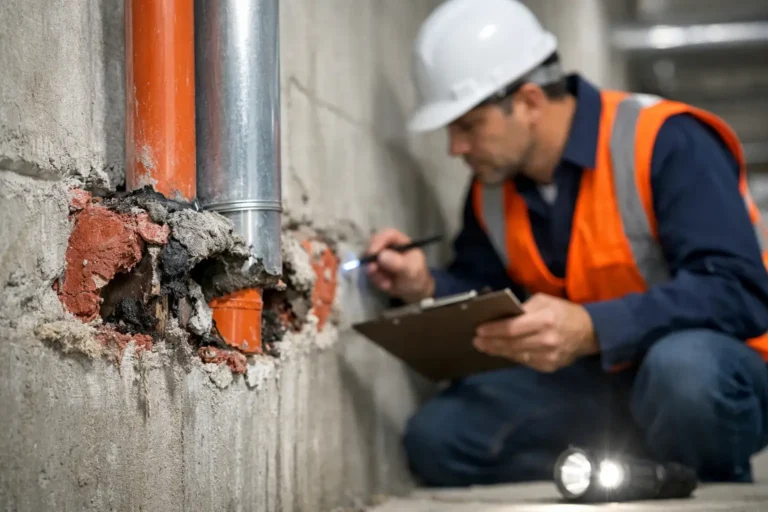
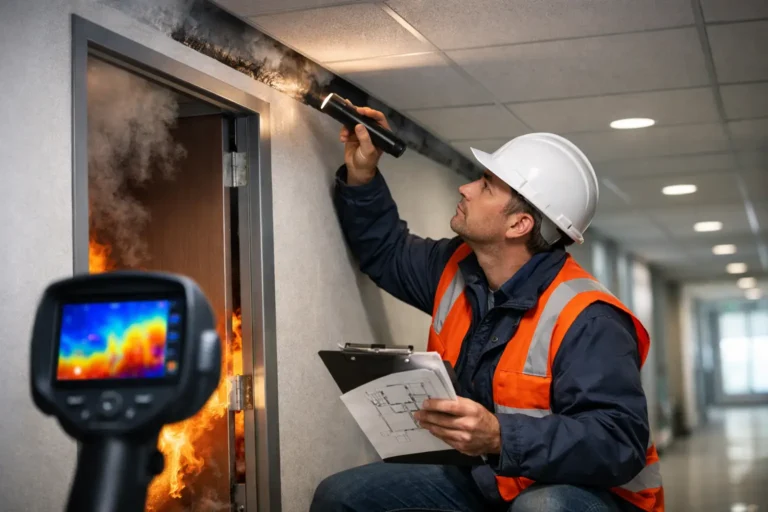
A proper inspection goes far beyond opening and closing the door once. The door leaf, frame, hinges, smoke seals, intumescent strips, glazing, signage, thresholds, hold-open devices and self-closing mechanism all need attention. So do the condition of the surrounding wall and any penetrations that could undermine the performance of the doorset.
Gaps are one of the most common issues. Too tight and the door may bind and fail to close properly. Too wide and smoke or fire can pass through too easily. The closer is another frequent failure point. If the door does not close fully onto the latch every time, its fire performance is already compromised.
Alterations also create risk. Letter plates, cat flaps, replacement locks, viewer holes, air transfer grilles and retrofitted access control hardware can all affect compliance if they are not appropriate for the fire rating and configuration. In communal areas, even something as simple as repeated impact damage from trolleys or moving equipment can degrade the edge of a door over time.
Common compliance failures in communal areas
The most worrying issues are often the least dramatic. A missing seal. Three hinges where the specification requires otherwise. A closer disconnected because occupants found it inconvenient. A fire door wedged open during cleaning or deliveries. These are everyday failures, and they are exactly the ones that enforcement officers and assessors keep finding.
Another problem is fragmented responsibility. In many buildings, one contractor inspects, another quotes, a third carries out repairs, and nobody takes ownership of the final compliant outcome. That is how defects remain open for months while paperwork gives a false sense of control.
There is also a tendency to repair what is visible and ignore what is critical. Repainting a damaged frame may improve appearance, but it does nothing if the door no longer fits the opening correctly. Replacing one hinge with a non-matching item might seem minor, but fire doors depend on tested and compatible components.
Inspection frequency and the reality on site
How often should communal fire doors be checked? The answer depends on the premises, occupancy profile and level of risk, but routine inspection is essential. In many residential settings, communal fire doors should be checked at regular intervals, with more formal and recorded inspections built into the wider fire risk management process.
Higher traffic buildings, vulnerable occupants and premises with a history of damage usually need closer monitoring. A care home corridor door used constantly throughout the day will not face the same wear profile as a lightly used riser lobby door in a small block. That is why a sensible inspection regime is based on actual risk, not guesswork.
The key is consistency. When inspections are sporadic, defects become normalised. Staff stop noticing that a door never quite shuts, or that a seal has fallen away. By the time someone raises it, the building may have been operating with reduced protection for months.
Why paperwork alone will not protect you
One of the biggest mistakes duty holders make is assuming a fire risk assessment on its own is enough. It is not. A risk assessment should identify concerns, but it does not replace detailed door inspections, remedial works and competent sign-off.
This is where many organisations feel exposed. They know they have responsibilities, but they do not always know whether previous inspections were thorough, whether repairs were completed to the right standard, or whether their records would stand up under scrutiny. That uncertainty is exactly what creates stress before an audit, an insurer review or an enforcement visit.
A stronger approach is to treat communal fire door compliance as a managed process. Survey the doors properly, categorise the defects, prioritise by risk, complete remedial works using appropriate materials and methods, then document the result clearly. That turns a vague compliance concern into something controlled and defensible.
The practical route to compliance
For most buildings, the quickest way to regain control is to start with a competent fire door inspection across all communal areas. That gives you a clear picture of what is compliant, what is borderline and what needs urgent action. From there, remedial works can be planned in a way that reduces disruption while addressing the highest risks first.
Some doors can be repaired economically. Others will need full replacement because the defects are too extensive, the certification trail is missing, or previous modifications have undermined the original performance. There is no value in forcing a repair where the safer and more defensible option is replacement.
This is where specialist support matters. An experienced compliance partner such as FireBlocked365 can identify hidden failures quickly, carry out corrective work properly and provide the reporting and certification duty holders need. That saves time, avoids repeated contractor visits and gives you a clearer path towards passing assessments first time.
Getting ahead of enforcement and liability
No responsible person wants to explain after a fire why a communal door had known defects that were left unresolved. The legal pressure is serious, but the human stakes are higher. Shared corridors and stairwells are where occupants depend on building protection most.
The good news is that fire door compliance is manageable when it is handled early and handled properly. If you know your communal doors have not been checked recently, if you have inherited patchy records, or if previous works were never clearly signed off, now is the right time to act. A tested door is protective. A guessed-at door is a risk waiting for scrutiny.
The most reassuring position is simple: know what you have, know what condition it is in, and fix what fails before somebody else discovers it for you.