A failed compartment wall hidden above a ceiling tile will not show up in a resident newsletter, but it can turn a containable fire into a multi-flat incident. That is why fire safety for housing associations cannot be treated as a paperwork exercise. If you manage occupied blocks, sheltered housing or mixed-use residential buildings, you are carrying legal responsibility for lives, property, reputation and regulatory scrutiny at the same time.
Housing associations work under constant pressure. Budgets are tight, stock is varied, and many buildings have a long history of alterations, repairs and undocumented changes. On paper, a block may appear compliant. In reality, fire doors may be missing cold smoke seals, service penetrations may be badly sealed, and previous works may have compromised the building’s fire strategy without anyone spotting it. Those are the gaps that create exposure.
What fire safety for housing associations really involves
The challenge is not simply arranging a fire risk assessment and filing the report. Real compliance means understanding whether the building’s protective measures actually work in practice. That includes fire doors, walls, risers, ceilings, service routes, escape routes, signage, detection, emergency lighting and the way residents use the building every day.
For housing associations, the scale of that responsibility makes things harder. A single organisation may be responsible for tower blocks, low-rise flats, converted houses, supported living schemes and older stock that has been patched and upgraded over decades. One standard checklist rarely fits every site. The right approach depends on height, layout, occupancy profile, resident vulnerability and the condition of passive fire protection.
This is where many duty holders get caught out. They assume the risk sits in obvious places such as alarms and extinguishers, while the more serious failures remain hidden in door sets, voids and fire stopping. Regulators, insurers and investigators do not accept good intentions as a defence. They look at whether defects were identified, recorded, acted on and signed off properly.
Where housing associations are most exposed
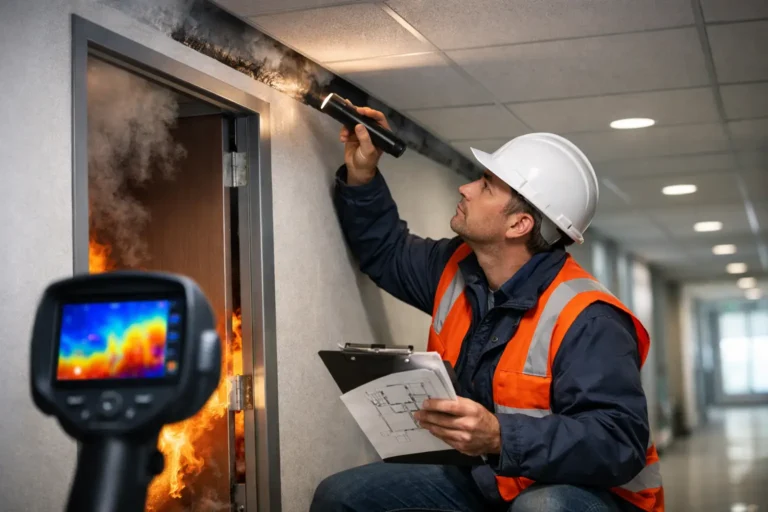
The highest risks are often the least visible. Fire doors are a common example. A door can look acceptable to an untrained eye and still fail on gaps, ironmongery, glazing, frame condition or certification. If that door is protecting a corridor or stairwell, the failure is not cosmetic. It affects escape, smoke control and containment.
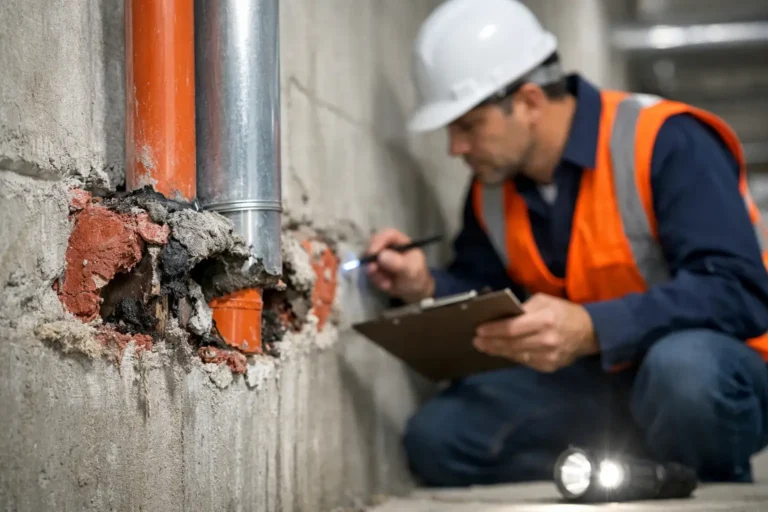
Compartmentation failures are just as serious. When plumbers, electricians, telecoms teams or general contractors pass services through walls and floors, fire-resistant construction is often disturbed. If those openings are not correctly reinstated, smoke and fire can spread far faster than the building strategy allows. Many associations inherit these defects over years of maintenance works, contractor changes and undocumented refurbishments.
There is also an operational risk. Even where defects are known, remedial work can stall because responsibilities are split across estates teams, compliance managers, external consultants and procurement processes. By the time action is approved, the issue has been live for months. That delay can become very difficult to defend if an inspection, complaint or incident occurs.
The legal side is only part of the problem
Yes, there is the obvious risk of enforcement action, prosecution, civil claims and insurance complications. But the wider damage can be just as severe. Residents lose confidence quickly if they believe building safety is being managed reactively. Board members want assurance that reported compliance is real. Senior teams need to know that when they say a building is safe, they have evidence to back it up.
For housing associations, fire safety is therefore both a life safety issue and a governance issue. It affects resident trust, investor confidence, regulator relationships and internal accountability. A poor audit trail can be as damaging as a poor physical standard because it suggests weak control.
That is why vague reporting causes problems. If an inspection identifies concerns but does not clearly state what is defective, how urgent it is, what standard applies and what corrective action is required, the housing association is left with uncertainty instead of control. In high-risk buildings, uncertainty is dangerous.
A practical approach to fire safety for housing associations
The most effective approach is to treat compliance as a managed process, not a one-off event. Start with the buildings that carry the highest resident risk or the greatest regulatory exposure. That usually means occupied blocks, higher-risk residential buildings, supported accommodation and any site with known legacy issues.
Once priorities are clear, the next step is to test whether the fire protection measures on site match the documented strategy. That means checking the physical building, not relying on assumptions or old records. Fire doors should be assessed properly. Fire stopping should be inspected where service penetrations exist. Compartments should be reviewed where intrusive works, refurbishments or recurring defects suggest the integrity may have been compromised.
Reporting then needs to be specific enough to drive action. A duty holder should be able to see what the defect is, where it sits, why it matters, how urgent it is and what remedial work is required. Anything less creates delay, disputes and repeat visits.
The final part is often the weakest in many compliance programmes – closing the loop. It is not enough to identify failures. Remedial works need to be completed correctly and supported by clear evidence and certification where required. Without that final sign-off, the risk has not gone away. It has just been documented.
Why generic contractors are rarely enough
Housing associations are often tempted to spread fire compliance tasks across multiple suppliers. One firm handles doors, another deals with maintenance, another carries out surveys, and someone else signs off paperwork. On cost spreadsheets, that can look efficient. In practice, it often creates gaps between diagnosis and correction.
The problem is simple. If the assessor identifies defects but the contractor does not fully understand the fire performance requirement, the remedial work may not solve the issue. Worse still, it may create a false sense of security. You end up paying twice – once for the inspection, then again to rectify poor rectification.
Specialist fire compliance support reduces that risk because the same process follows the problem from identification through to repair and documented completion. That makes it easier to prioritise urgent items, plan resident access, minimise disruption and produce evidence that stands up under scrutiny. For housing teams already stretched across repairs, complaints and asset management, that clarity matters.
What good looks like in real terms
Good fire safety management is calm, current and evidence-based. You know which buildings present the greatest risk. You know where the defects are. You know what is being done about them, by when, and to what standard. If an enforcing authority, insurer or board member asks for proof, you can provide it without scrambling through old emails and conflicting reports.
It also means accepting that some buildings will reveal more problems than expected. Older stock, especially where there have been repeated upgrades or contractor interventions, often contains hidden failures. Finding them is not a sign that the process is failing. Ignoring them is.
For many housing associations, the real improvement comes when fire safety stops sitting in a grey area between compliance and maintenance. Once it is treated as a specialist risk requiring clear surveys, decisive remedial action and proper certification, decision-making becomes faster and defensibility becomes stronger.
That is the point where the pressure starts to lift. Instead of reacting to the next inspection, complaint or alarming discovery on site, you are working from a controlled plan. That is what specialist partners such as FireBlocked365 are there to deliver – not just a list of faults, but a route to compliance that is practical, fast and clear.
Residents do not see every fire door inspection, every opened-up service penetration or every certificate filed after remedial work. They should not need to. Their confidence comes from living in a building where the people responsible have taken the hidden risks seriously, acted early and refused to leave safety to chance.