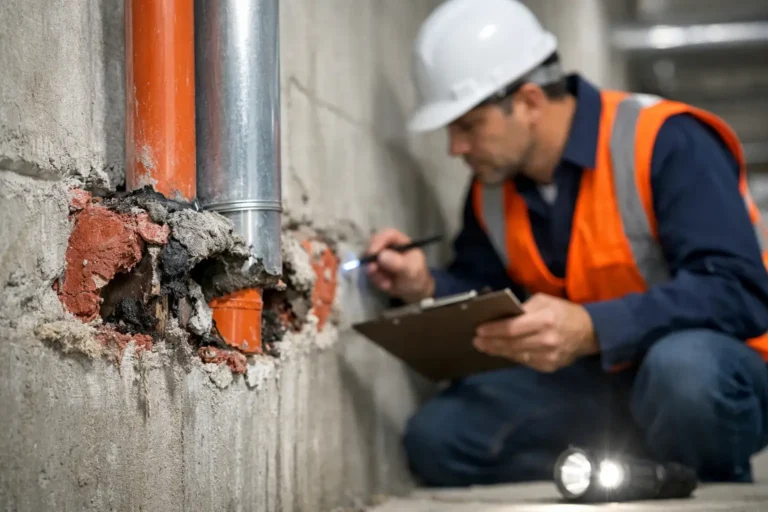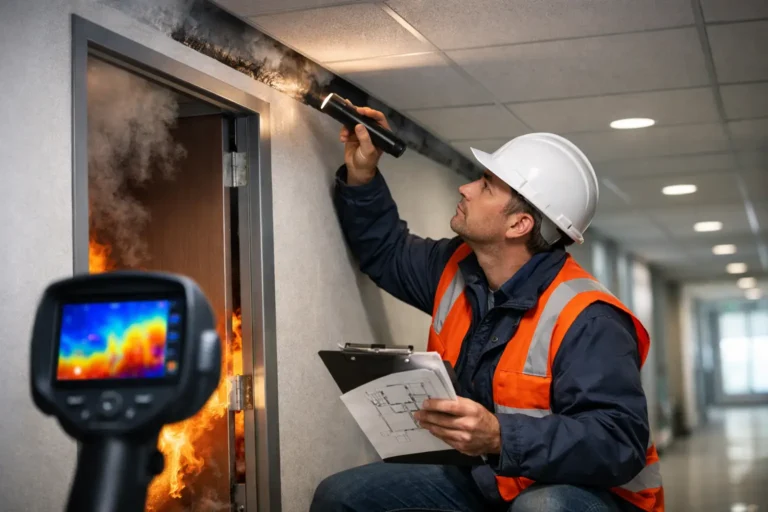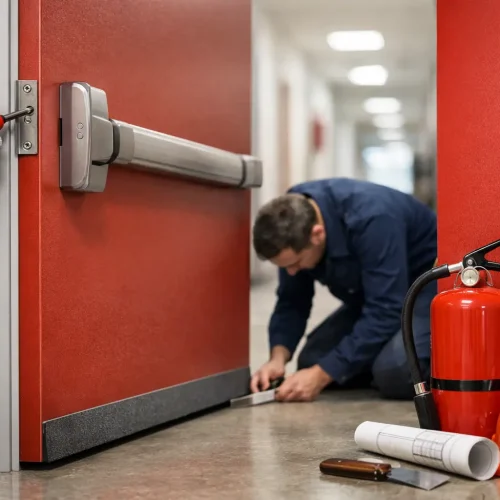
A failed fire door inspection rarely comes down to one dramatic fault. More often, it is a build-up of smaller defects – excessive gaps, damaged seals, poor closing action, incorrect ironmongery, or old repairs that were never suitable in the first place. That is why the best fire door remedial solutions are not simply the fastest or cheapest. They are the ones that restore performance, satisfy the evidence trail, and stand up when your building is scrutinised by assessors, insurers, residents, or regulators.
For duty holders, this is not an abstract maintenance issue. If a fire door fails, compartmentation fails with it. Smoke spread accelerates, escape routes are compromised, and the legal position becomes far more serious. In schools, care settings, HMOs, blocks of flats, and commercial premises, the cost of delay can be measured in enforcement action as well as risk to life.
What makes the best fire door remedial solutions?
The right remedial approach starts with one simple question: can the door set be brought back to a compliant, reliable standard, or is replacement the safer route? That decision should never be based on guesswork. It needs a competent inspection of the complete doorset, not just the leaf.
A proper solution looks at how the door performs as a system. The leaf, frame, hinges, self-closer, glazing, intumescent seals, smoke seals, signage, latch, threshold gaps, over-panels and surrounding fire stopping all matter. Fixing one visible issue while ignoring the rest is how buildings end up with expensive remedials that still fail on reassessment.
The best outcome is not the most extensive scope of work. It is the most defensible one. If adjustment, component replacement, certified repairs, or frame correction can restore compliance, that may be the right answer. If the integrity of the door set is too far gone, partial repairs can become a false economy.
Common defects and the right remedial response
Many non-compliant fire doors can be saved, but only when defects are correctly identified and the remedial work is matched to the failure.
Excessive perimeter gaps are one of the most common issues. In some cases, the answer is skilled adjustment of the leaf, hinges, latch position, or closer. In others, the frame itself is out of tolerance, and adjustment alone will not hold. If the door has been repeatedly planed down over time, replacement may be more realistic than trying to patch a dimensional problem that keeps coming back.
Damaged or missing intumescent and smoke seals are another frequent finding. Replacing seals can be straightforward, but it is only suitable where the grooves, leaf condition, and original specification allow for a like-for-like compliant repair. Poorly fitted seals, mismatched products, or ad hoc substitutions can undermine the whole doorset.
Self-closer failure is often underestimated. A fire door that does not close fully into the frame is not doing its job. Sometimes the closer needs adjustment. Sometimes it is incorrectly specified for the size, weight, or use pattern of the door. In high-traffic buildings such as schools or care homes, repeated misuse can also point to a wider operational issue. The remedy may need to cover both hardware replacement and practical measures to stop the same failure happening again.
Ironmongery defects matter more than many managers expect. Hinges, latches, handles and glazing systems must all be compatible with the fire door specification. Replacing a worn hinge with a non-compliant alternative might solve an immediate maintenance problem while creating a fire safety one. That is why remedials should be handled by specialists who understand certified components and system compatibility, not by a general maintenance team working under time pressure.
Repair or replace? The decision that affects cost and compliance
This is where many duty holders lose time and money. They are told every defective door must be replaced, or they are reassured that everything can be repaired. Neither position is automatically right.
Repair is often the best option when the core door set remains structurally sound, the original specification can still be supported, and the defects are limited to hardware, seals, adjustment, glazing components, or localised edge damage. It is usually quicker, less disruptive, and more cost-effective.
Replacement becomes the better option when the door leaf has been materially altered, third-party certification cannot be evidenced, the frame condition is poor, historic works have compromised performance, or the cumulative defects make compliant repair uncertain. In occupied buildings, uncertainty is the problem. If there is serious doubt over whether a repaired door will satisfy inspection and perform in a fire, replacement reduces future exposure.
The best fire door remedial solutions take a balanced view. They do not push replacement where a compliant repair is realistic, and they do not force repairs onto doors that are already beyond sensible recovery.
Why cheap remedials often fail twice
There is a pattern behind many repeat failures. A contractor fixes the obvious issue, leaves the underlying cause untouched, and no one checks the completed work against the original defect schedule. The building gets a short-term cosmetic improvement but no real compliance confidence.
This is especially risky where multiple contractors are involved. One team replaces seals, another adjusts closers, and someone else patches surrounding walls later. Without a single compliance-led process, defects fall through the gaps. Certification becomes harder, records become fragmented, and the same door can generate repeat costs across several visits.
A cheaper quote can quickly become the expensive option if it leads to failed reassessment, resident complaints, insurance friction, or enforcement attention. For duty holders, the value is not in spending less on the day. It is in getting the job closed properly, with evidence that supports your position if questions are asked later.
The role of documentation in the best fire door remedial solutions
Good remedial work is only half the job. The other half is proving what was found, what was done, and why the door is now considered compliant or suitable for sign-off.
That means clear defect reporting, traceable remedial recommendations, and completion records that align with the original findings. Where components are replaced, specification matters. Where doors are repaired, the basis for repair must be defensible. Where replacement is required, records should show why repair was not enough.
For landlords, housing providers, schools, care operators and facilities teams, this paperwork protects more than a file. It protects decision-making. If a regulator, insurer, investigator, or responsible person asks how a known defect was handled, vague notes and verbal assurances will not carry much weight.
Choosing a provider who can actually close the problem
The strongest providers do more than inspect. They assess, explain priorities, complete the remedial work, and give you a documented route to sign-off. That end-to-end approach matters because it removes the handover points where risk often increases.
You need a specialist who can distinguish between urgent life safety failures and lower-priority maintenance issues, who understands occupied buildings, and who can work quickly without creating unnecessary disruption. In practice, that means clear scopes, competent operatives, realistic timescales, and reporting that makes sense to non-technical stakeholders as well as auditors.
This is where a compliance partner such as FireBlocked365 adds real value. Not because the language is more technical, but because the process is controlled from survey through to remedial action and evidence. That reduces uncertainty, which is exactly what duty holders are paying to remove.
Best fire door remedial solutions for occupied buildings
Occupied buildings bring trade-offs. In a hospital, you may need phased remedials around clinical use. In a school, access windows are tight and safeguarding matters. In a care home, resident vulnerability changes how quickly and how carefully work must be carried out. In multi-occupancy residential blocks, communication and disruption control can be as important as the physical repairs.
The best approach is one that reflects the building, not a generic works package. Some sites need immediate temporary risk controls before full remedials begin. Others can be sequenced floor by floor. The key is urgency with control. Fast action is essential, but rushed decisions that ignore occupancy realities can create fresh operational problems.
If you are responsible for a regulated building, do not wait for a failed assessment, a complaint, or a near miss to force the issue. Fire door defects rarely improve with time, and they rarely stay isolated. The safest position is to get the doors inspected properly, remedials scoped clearly, and the right corrective work completed before the problem becomes harder to explain.