A failed inspection rarely starts on inspection day. It usually starts weeks earlier – with a missing certificate, an overlooked service penetration, a fire door that almost closes properly, or a last-minute assumption that the building is “probably fine”. If you are responsible for a regulated building, first time fire sign off is not a nice-to-have. It is the difference between controlled compliance and costly disruption.
For landlords, managing agents, school estates teams, care providers and commercial duty holders, the pressure is real. You are not only trying to satisfy regulations. You are protecting residents, staff, visitors, budgets and reputation at the same time. That is why first-time approval matters so much. A delayed sign-off can hold up occupation, trigger insurer concerns, create enforcement risk and leave you answering difficult questions from people who expect certainty.
What first time fire sign off actually means
First time fire sign off means your building, or the specific fire safety element under review, meets the required standard without needing repeat visits, reactive remedials or rushed clarification after the fact. In practice, that means the documentation is in order, the physical works match the specification, defects have been identified before the inspection, and the evidence stands up to scrutiny.
That sounds straightforward, but many buildings fail at the gap between paperwork and reality. A contractor may state that works are complete, yet the compartmentation is breached above a ceiling void. A fire door may look new, yet the gaps, seals or ironmongery do not comply. A survey may have been done, but the actions were only partly closed out. Sign-off fails when one part of the process is treated in isolation.
Why first time fire sign off matters more than most duty holders expect
The obvious reason is safety. If fire doors, fire stopping or compartment lines are not performing as intended, smoke and flame spread faster, evacuation becomes harder and lives are put at risk. That is the part nobody can afford to get wrong.
The second reason is legal exposure. If you are the responsible person or acting on behalf of one, you need to show that fire precautions are suitable, maintained and evidenced. If an assessor, regulator or insurer asks for proof, vague assurances will not protect you. Clear records, competent inspections and documented remedials will.
The third reason is operational. Failed sign-off often means repeat attendance, programme delays, frustrated occupants and unplanned spend. In live environments such as schools, hospitals, care homes and multi-occupied residential buildings, delays carry a practical cost. Rooms stay out of use. Projects drift. Internal stakeholders lose confidence. Problems that could have been resolved in sequence turn into urgent snagging under pressure.
The most common reasons buildings miss first time fire sign off
The biggest issue is usually not one dramatic fault. It is a cluster of smaller compliance failures that were never joined up.
Fire doors that look acceptable but are not compliant
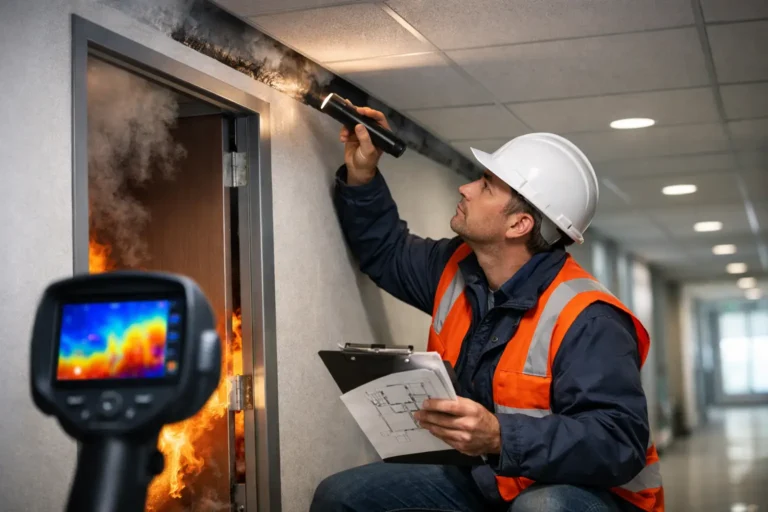
This is a frequent problem. A fire door can appear solid and well-fitted to an untrained eye, but still fail on critical points such as leaf-to-frame gaps, damaged seals, incorrect hinges, non-compliant glazing, poor closer function or unsuitable hardware. In occupied buildings, doors also deteriorate over time. A compliant installation from years ago may no longer perform as required.
Incomplete or disturbed fire stopping
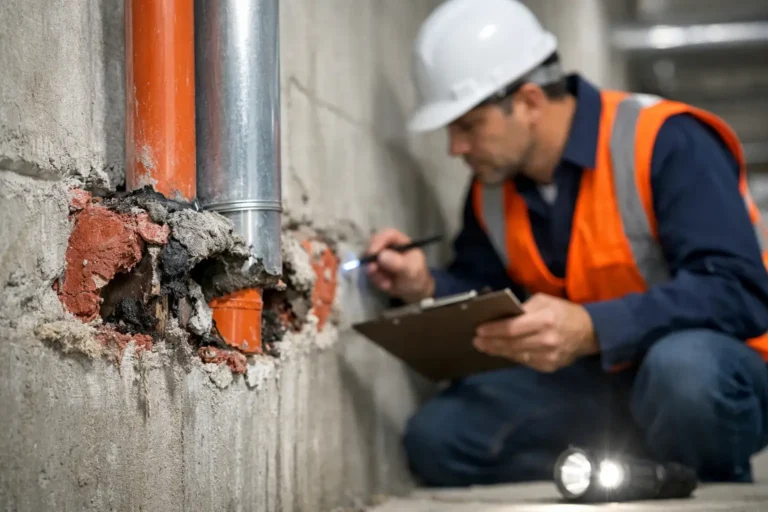
Fire stopping failures are often hidden until someone competent looks properly. Service penetrations above ceilings, behind risers or within plant areas are regularly left incomplete, altered by later trades or patched with unsuitable materials. These defects undermine compartmentation and are one of the main reasons a building appears compliant on paper but struggles during review.
Poor evidence and weak documentation
Even if works have been done, sign-off can stall when the records are missing, unclear or inconsistent. Inspectors and stakeholders want traceable evidence. They need to see what was inspected, what defects were identified, what remedial action was taken and whether the final condition meets the required standard. If the paperwork is vague, confidence drops quickly.
Late-stage compliance checking
Some duty holders only bring in specialist scrutiny when the pressure is already high – just before occupation, handover or a formal assessment. At that point, there is very little room to correct defects calmly. The result is rushed decisions, inflated costs and a higher chance of failing first time.
How to improve your chances of first time fire sign off
The most effective approach is to stop treating inspection, remedial work and certification as separate events. They need to operate as one controlled process.
Start with a competent survey, not assumptions
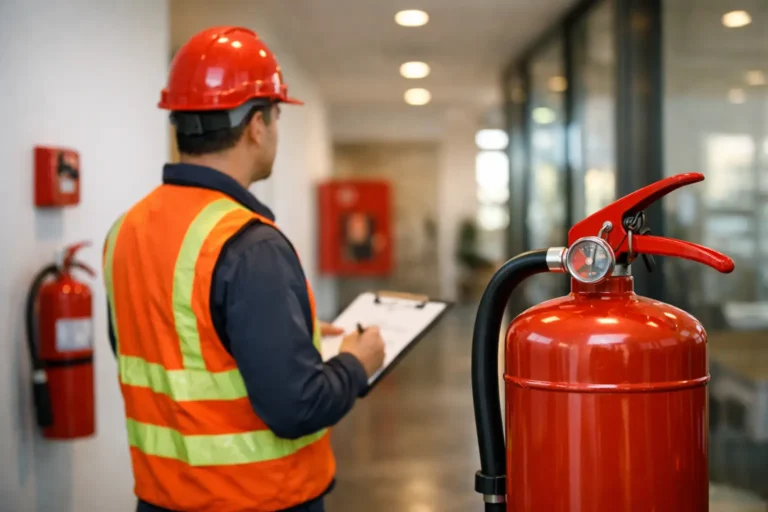
Before any sign-off is expected, the building needs a detailed assessment of the relevant fire safety elements. That may include fire doors, compartmentation, fire stopping and associated risk areas. The purpose is simple: identify hidden failures early, while there is still time to correct them properly.
A basic visual check is rarely enough in complex or regulated premises. What matters is whether the inspection is detailed, practical and focused on outcomes. You need to know not just that defects exist, but where they are, how serious they are and what must happen next.
Prioritise remedials that affect compliance, not cosmetic snags
Not every defect carries the same weight. A competent specialist will separate high-risk compliance failures from lower-priority items so that time and budget go where they matter most. This is where experience makes a real difference. If everything is treated as equally urgent, teams lose focus. If the wrong items are delayed, sign-off is put at risk.
Make sure the remedial work is carried out by people who understand fire performance
This is where many projects come unstuck. General trades may be capable in other areas, but fire protection work is not just a finishing exercise. The detail matters. The product matters. The installation method matters. If the work is poorly executed, you may end up paying twice – once to install it and again to put it right.
Build the evidence as the work progresses
Do not wait until the end to assemble compliance records. Good sign-off depends on a clear chain of evidence. Photographs, location records, defect logs, product details and completion reports should be gathered during the process, not chased afterwards. That makes final review quicker and far more credible.
What inspectors and assessors are really looking for
They are looking for confidence. Not false confidence, but evidence-backed assurance that the fire safety measures in place will perform as intended.
That means they want to see consistency between what the building should have, what is physically installed and what the records show. If a drawing suggests a protected compartment line, they will expect that line to be intact. If a door is supposed to provide a fire-resisting barrier, they will expect the components and condition to support that. If remedials have been recorded as complete, they will expect the site condition to match.
They are also looking at competence. Who inspected the issue? Who carried out the work? How was the outcome verified? If those answers are weak, the whole sign-off process becomes harder, even where the defects seem minor.
Why an end-to-end approach gives you a better result
First time fire sign off is far more achievable when one specialist team takes responsibility from survey through to corrective action and final documentation. That does not just save time. It reduces handover errors, closes reporting gaps and removes the confusion that happens when multiple parties each assume someone else has checked the critical detail.
For duty holders, that joined-up approach also reduces stress. Instead of managing separate consultants, contractors and paperwork trails, you have one clear process and one accountable route to compliance. That matters when residents are waiting, internal teams are asking for updates, or an external deadline is approaching.
This is exactly why many clients choose a specialist compliance partner such as FireBlocked365. The value is not only in identifying defects. It is in controlling the entire route to a defensible, properly evidenced outcome.
When first time fire sign off may still depend on circumstances
There are times when even a well-managed project faces external constraints. Hidden defects in older buildings, inaccessible voids, previous poor workmanship or incomplete historic records can all affect timing. In occupied premises, access restrictions may also slow inspection and remedial sequencing.
That does not mean first-time approval is unrealistic. It means the process must be honest from the outset. A specialist should tell you where the risks sit, what could affect programme, and what needs early intervention. Straight answers at the beginning are far better than false reassurance followed by failure later.
If you are responsible for a building, the safest position is simple: find the issues early, fix them properly, and document every stage so the final sign-off is a confirmation, not a gamble.
The best time to prepare for first time fire sign off is before anyone asks whether you are ready.