A failed fire assessment rarely comes down to one dramatic fault. More often, it is a build-up of overlooked issues – damaged fire doors, missing seals, poor compartmentation, weak records, or remedial works that were never properly signed off. If you need to pass fire assessment first time, the real task is not last-minute preparation. It is getting the building, the evidence, and the follow-through under control before an assessor finds the gaps for you.
For landlords, responsible persons, school leaders, care providers, housing teams and facilities managers, that matters for one simple reason. A poor result does not just create paperwork. It can trigger enforcement pressure, insurance concerns, operational disruption, reputational damage, and in the worst cases, serious danger to the people inside the building.
Why buildings fail when they seemed fine
One of the biggest problems in fire safety compliance is false confidence. A building can look orderly and still have serious defects behind risers, above ceilings, around service penetrations or within door sets that have been altered over time. What passes a visual glance from site staff may fail under competent inspection.
That is why first-time success usually depends on what happens before the formal assessment. If previous surveys were too broad, if maintenance was reactive, or if contractors treated fire protection as a side issue rather than a specialist discipline, hidden failures tend to remain in place until the worst possible moment.
There is also the issue of fragmented responsibility. In many occupied premises, one party manages the building, another oversees maintenance, another controls budgets, and someone else holds the compliance file. When ownership is spread out like that, defects stay unresolved because nobody has full control from survey to completion.
What assessors are really looking for
An assessor is not there to be impressed by tidy corridors or a neatly labelled folder. They are looking for evidence that the building can resist fire and smoke as intended, and that the responsible person can demonstrate active control of the risk.
That means physical condition matters, but so does proof. Fire doors need to be suitable, correctly fitted, and maintained. Fire stopping needs to protect compartment lines rather than leave unsealed routes for smoke and flame. Any works carried out need to be traceable, competent, and properly recorded. If documentation says one thing and the building shows another, the building wins – and not in your favour.
This is where many duty holders get caught out. They assume an old certificate, a generic risk assessment or a contractor invoice will satisfy scrutiny. Sometimes it helps, but often it does not. If the evidence is vague, outdated or disconnected from current site conditions, it offers little protection.
How to pass a fire assessment first time
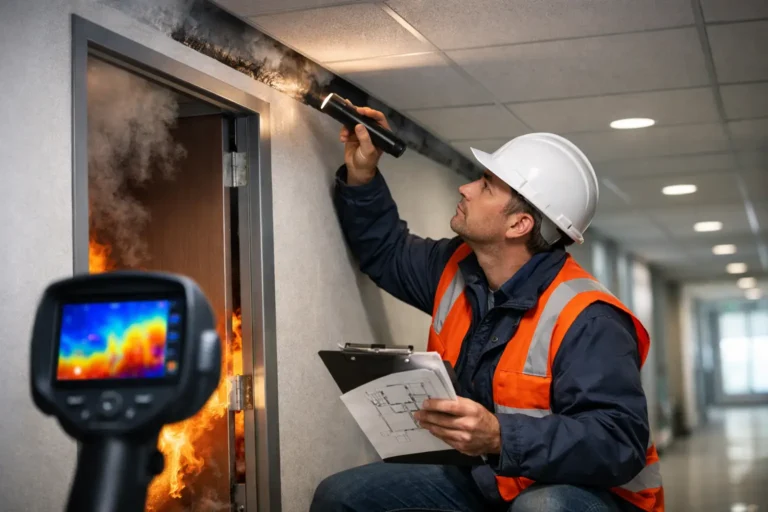
If the goal is to pass a fire assessment first time, you need a process that is practical, not theoretical. Start with a competent inspection focused on the areas most likely to fail under scrutiny. In regulated buildings, that often means fire doors, compartmentation, service penetrations, loft voids, risers, plant areas and any locations where historic works may have broken fire lines.
The next step is just as important. Findings need to be translated into clear remedial actions with priorities, not buried in vague comments. A report that tells you there is a problem but leaves you guessing on severity, location or required fix creates delay. Delay is where failed assessments begin.
Then comes the part many providers do not handle well – actually getting the defects resolved properly. Not patched. Not temporarily improved. Properly corrected using the right materials, right installation methods and right evidence. A fast turnaround matters, but speed without technical accuracy simply stores up another failure later.
Finally, your records need to match the reality on site. That means updated reports, evidence of remedial works, photographs where useful, and certification or sign-off where required. A compliant building with poor records can still create stress during assessment. A well-documented building with unresolved faults is worse.
The common faults that stop first-time success
Some failures appear again and again because they sit in busy parts of the building and deteriorate gradually. Fire doors are a prime example. Gaps are wrong, self-closers are ineffective, hinges are missing screws, glazing is compromised, smoke seals are painted over, or the entire door set is simply not suitable for the location. These issues are easy to miss if checks are inconsistent.
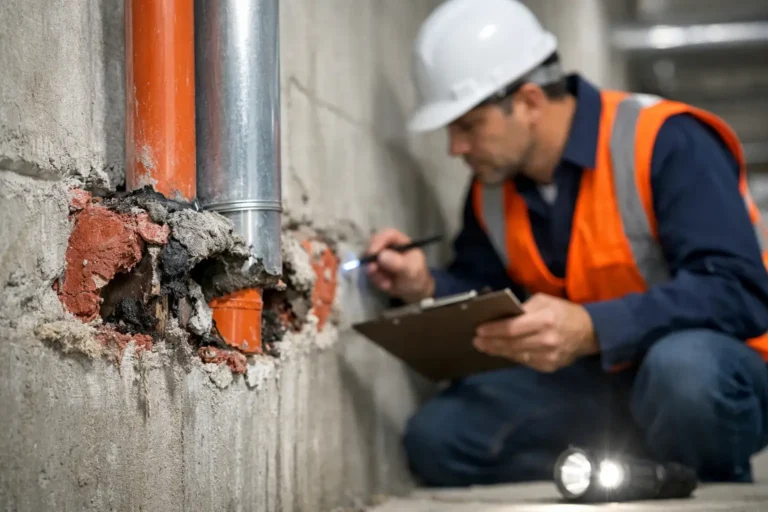
Compartmentation defects are often more serious because they are less visible. A small opening around pipework or cabling can defeat the purpose of a fire-resisting wall. Multiply that across years of electrical, plumbing and data installations, and a building can end up with widespread breaches no one has recorded.
Another issue is incomplete remedial history. Perhaps a survey identified defects six months ago, but only some were addressed. Perhaps works were done in one area but not another. Perhaps the contractor completed the task but left no evidence strong enough to satisfy later scrutiny. In each case, the risk is the same: the building looks part-managed rather than fully controlled.
Why a cheap inspection often becomes an expensive problem
It is tempting to choose the lowest-cost assessment and deal with the rest later. For high-responsibility premises, that approach usually creates more pressure, not less. A basic inspection can miss hidden defects, understate remedial scope, or produce reporting too generic to support action. You then pay again for better surveying, urgent repairs, repeat visits and delayed sign-off.
The trade-off is straightforward. A thorough specialist assessment may feel more involved at the start, but it gives you something you can act on with confidence. That reduces repeat disruption, internal confusion and the chance of an unwelcome surprise during formal review.
This matters especially in care homes, schools, hospitals and occupied residential settings where works need careful planning. The right provider will balance urgency with practicality, keeping disruption under control while still treating fire safety as the critical life-safety issue it is.
Evidence matters as much as the repair
A surprising number of buildings fail not because nobody cared, but because nobody closed the loop. The issue was found. A contractor attended. Something was done. But there is no clear record of what standard was restored, what product was used, who checked it, and whether the defect was fully resolved.
Assessments are easier when the audit trail is clean. You should be able to show what was inspected, what was found, what was repaired and when it was signed off. That level of control protects more than compliance. It protects the decision-maker when questions come from regulators, insurers, residents, governors, trustees or board members.
In practice, confidence comes from alignment between three things: the building condition, the paperwork, and the competence behind both. If any one of those is weak, first-time success becomes less predictable.
What good preparation looks like for duty holders
Good preparation is not a frantic rush the week before inspection. It is a controlled sequence. You identify likely failure points early, prioritise the critical defects, arrange competent remedial works, and keep evidence organised as you go. That sounds simple, but it only works when someone is driving the process from start to finish.
For many organisations, that is the missing piece. Internal teams may be capable and diligent, but they are often stretched across estates, compliance, procurement and day-to-day operations. Fire safety then becomes one pressure among many. A specialist partner changes that by taking ownership of the details that tend to slip through.
That is why providers such as FireBlocked365 focus on more than inspection alone. The real value is in joining up surveys, corrective work and documented sign-off so there is less room for drift, delay or misunderstanding.
Pass fire assessment first time by removing uncertainty
The safest route to first-time success is not hoping the building will be good enough. It is removing uncertainty before the assessment happens. That means no guessing whether a door is compliant, no assumption that an old repair is still intact, and no reliance on paperwork that cannot stand up to scrutiny.
When a building is properly checked, defects are clearly identified, remedial works are completed competently, and records are kept in order, the assessment becomes what it should be – confirmation of control, not a test of luck.
If you are responsible for a building where people sleep, learn, recover, work or live, that level of control is not an optional extra. It is how you protect lives, reduce exposure, and face an assessment with confidence rather than crossed fingers.
The most helpful step is usually the earliest one: get clarity before the assessor arrives, and the rest becomes far more manageable.