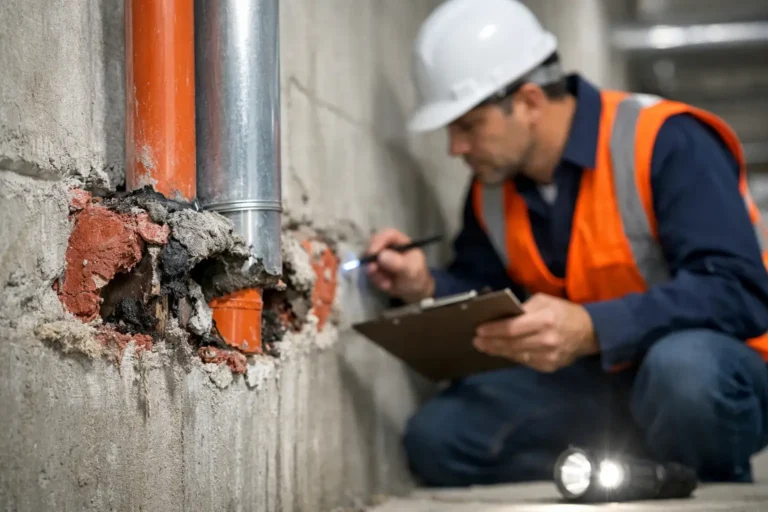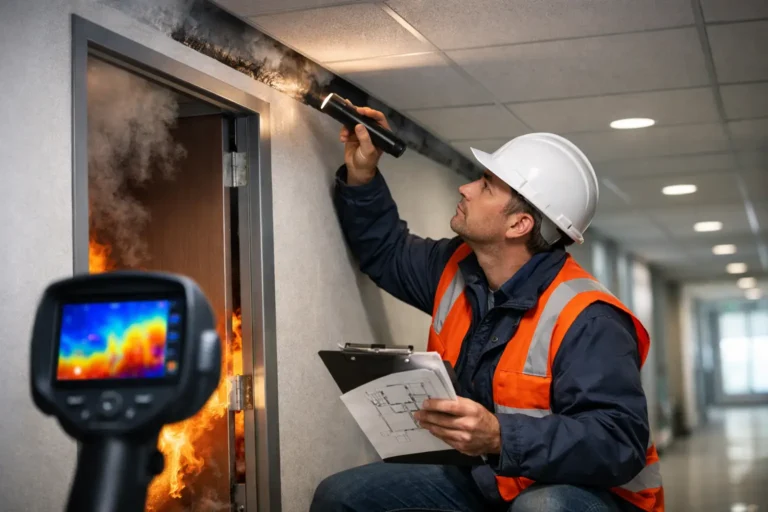
A fire door can look sound from a corridor and still fail when it matters. A damaged seal, excessive gap, unsuitable hinge, missing signage or poorly fitted closer can compromise compartmentation and put occupants at risk. That is why choosing the best fire door compliance providers is not a procurement exercise to rush through on price alone. It is a decision that affects legal exposure, business continuity and, most importantly, people’s lives.
For responsible persons, landlords and building managers, the pressure is real. Regulators, insurers, residents, staff and governing bodies will all expect clear evidence that fire doors have been inspected, defects understood and necessary work completed properly. The right provider brings order to that responsibility. The wrong one can leave you with a report full of red flags, no route to resolution and no confidence that your building is safer.
What the best fire door compliance providers actually deliver
A credible provider does more than walk a building with a clipboard. They understand how every part of a fire door assembly works together: the door leaf, frame, hinges, intumescent and smoke seals, glazing, ironmongery, signage, closing device and threshold gaps. Their inspection should assess the complete assembly, not simply whether the door closes.
The strongest providers also distinguish between an observation and a meaningful compliance risk. A report that lists hundreds of defects without explaining priority, location, likely impact or action required may create more confusion than control. You need findings that are clear enough for your team, board, managing agent or contractor to act on without guesswork.
Most importantly, a provider should be able to take responsibility beyond the survey. Inspection-only services can have a place when you already have a competent remedial contractor and a disciplined compliance process. But for many occupied buildings, splitting the work between several parties creates delay, disputes and gaps in accountability. A provider that can inspect, scope, remedy and document the outcome gives duty holders a far more controlled route to compliance.
Start with competence you can verify
Fire door safety is specialist work. Ask who will carry out the inspection, what relevant training and experience they hold, and how their competence is maintained. A reassuring company name or an attractive quote is not evidence on its own.
Look for a provider that can explain its inspection methodology in plain English. They should be comfortable discussing the applicable fire strategy, the building’s use, the door rating where known and the standards against which defects are judged. They should also recognise when further investigation is necessary. For example, a door labelled as fire-resisting may still require closer examination if the frame, seals or replacement hardware do not appear compatible with the original specification.
Third-party certification and recognised industry accreditation can provide useful assurance, but they should not be treated as a substitute for scrutiny. Ask what scope an accreditation covers. It may relate to installation, inspection, manufacturing or a specific type of work rather than every service the provider offers. The best firms are open about this and provide evidence without making vague claims.
Competence also includes judgement. In a care home, hospital, school or high-rise residential building, a provider must understand the consequences of disruption and the urgency of particular defects. A wedged-open fire door on a busy escape route cannot wait for a routine maintenance cycle simply because that is operationally convenient.
Demand an inspection report that drives action
Your report is the record that may be reviewed long after the survey team has left site. It needs to stand up to scrutiny from auditors, insurers, enforcing authorities and your own senior stakeholders.
A useful fire door report identifies each door clearly, usually with a unique reference and location. It records the condition found, photographs relevant defects, explains the remedial action required and assigns a proportionate priority. It should make it obvious which doors present immediate concerns, which require prompt repair and which can be planned into a managed maintenance programme.
Beware generic wording such as ‘repair as required’ or ‘non-compliant’ with no supporting detail. That language leaves too much room for interpretation. You need to know whether the issue is a failed self-closing device, damaged intumescent strip, excessive leaf-to-frame gap, unsuitable hinge or a defect that may require replacement rather than repair.
The report should also reflect the real conditions of the building. A door held open by an unauthorised wedge, for instance, is not only a door defect. It may reveal an operational problem: poor ventilation, difficult access, inadequate hold-open arrangements or a lack of staff awareness. Good providers identify that wider risk so it can be resolved properly.
Check whether remedial works are genuinely in-house and controlled
Many duty holders discover too late that their chosen assessor does not undertake repairs, leaving them to find a separate contractor and translate technical findings into a scope of work. This can cause delay, inflated costs and disagreement over what the report meant.
Before appointing a provider, ask whether they can deliver remedial works directly, how they control quality and what evidence they issue when work is complete. The answer should cover more than fitting a new closer or replacing a seal. Fire door repair must protect the performance of the complete assembly. Unapproved alterations, incompatible components or poor workmanship can create a fresh compliance problem.
There are circumstances where replacement is the right answer, particularly where a door is extensively damaged, lacks reliable identification or has been altered beyond confidence. However, replacement is not automatically the most proportionate solution. A professional provider should explain whether a compliant repair is practical, what it involves and why replacement may or may not be justified.
Ask how disruption will be managed. In occupied premises, access, noise, dust, resident communication and safeguarding may matter as much as the repair itself. A capable team plans around the building rather than expecting the building to stop around them.
Look for evidence, not promises of certification
‘Certified’ is a reassuring word, but it can mean different things. Clarify exactly what documentation you will receive following inspection and remedial works. Your compliance file should create a clear trail from identified defect to completed action.
Depending on the scope of work, that evidence may include the inspection report, asset register updates, photographs, remedial records, product details, completion documentation and any applicable certification. It should identify what was inspected or repaired, where it was located, when it was completed and who carried it out.
Do not accept a blanket statement that a whole building is compliant if only selected doors have been inspected or repaired. Honest evidence has boundaries. The best providers define those boundaries clearly, which protects you from relying on claims that cannot be substantiated later.
This level of documentation matters when personnel change, buildings are sold, incidents are investigated or an enforcing authority asks for proof. Memory is not a compliance system. A well-maintained record is.
Compare providers on response, scope and accountability
Price matters, particularly across large portfolios or buildings with hundreds of doors. Yet the cheapest survey can become the most expensive option if it produces incomplete data, misses critical defects or creates a backlog that nobody owns.
When comparing proposals, make sure each provider is pricing the same scope. Establish whether the quote includes all doors, follow-up visits, photographs, prioritised findings, remedial specification, project management and completion evidence. Also ask what happens if urgent defects are found during the survey. You need a provider that can respond decisively, not one that merely records the danger and leaves.
Response time is especially significant for buildings with vulnerable occupants or continuous public use. A provider should be able to explain how it handles urgent work, communicates with site teams and keeps you informed until the risk is controlled. Fast attendance has value, but only if the work is technically sound and properly recorded.
Accountability should remain clear from first survey to final sign-off. You should know who your point of contact is, who approves variations, how costs are managed and how progress is reported. FireBlocked365 works on this end-to-end basis because duty holders need practical resolution, not another report to chase.
Questions to ask before appointing a provider
A short conversation can reveal whether a supplier understands the responsibility they are taking on. Ask who will inspect your doors, how defects will be prioritised, whether they carry out repairs, how they verify completed work and what documentation you will receive.
Ask them to explain how they deal with uncertainty too. Fire doors in older buildings may have incomplete records, unclear ratings or historic alterations. The right answer is not false certainty. It is a measured plan: investigate, protect occupants, recommend proportionate action and document the decision.
Also ask for a realistic programme. A provider that promises an immediate full resolution without first understanding access, quantities, building use and material availability may be selling reassurance rather than delivery. The best fire door compliance providers are urgent when risk demands it, but disciplined enough to plan work properly.
Your fire doors should never become an unseen liability waiting for an inspection, complaint or incident to expose it. Choose a specialist that can find the failures, explain the risk, complete the corrective work and leave you with evidence you can rely on. That is how a difficult compliance duty becomes a controlled, defensible part of running a safe building.