A failed fire door inspection rarely starts with one obvious problem. It starts with a wedge under a door, a damaged seal nobody logged, a service penetration left unsealed after another trade finished, or paperwork that cannot prove what was checked and when. That is why choosing a certified fire safety contractor is not a box-ticking decision. For landlords, building managers, schools, care providers and responsible persons, it is the difference between controlled compliance and a serious liability.
If you are responsible for occupied premises, the pressure is real. You are expected to protect lives, satisfy regulators, reassure insurers and keep buildings operating with minimal disruption. General maintenance teams can be useful, but fire safety compliance is where assumptions become expensive. You need evidence, technical accuracy and remedial work that stands up to scrutiny.
What a certified fire safety contractor actually does
A certified fire safety contractor does more than carry out an inspection and leave you with a list of problems. The right specialist assesses the condition of critical passive fire protection elements, identifies hidden failures, explains the compliance risk in plain English, completes the remedial work properly and provides documentation that supports your legal position.
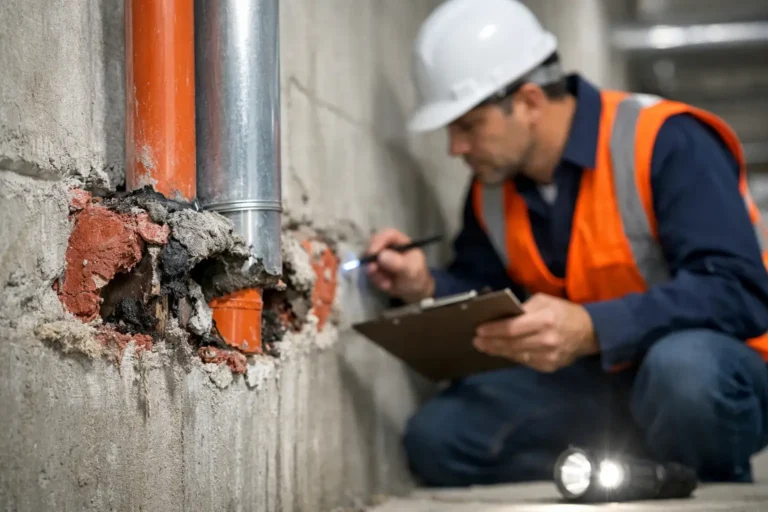
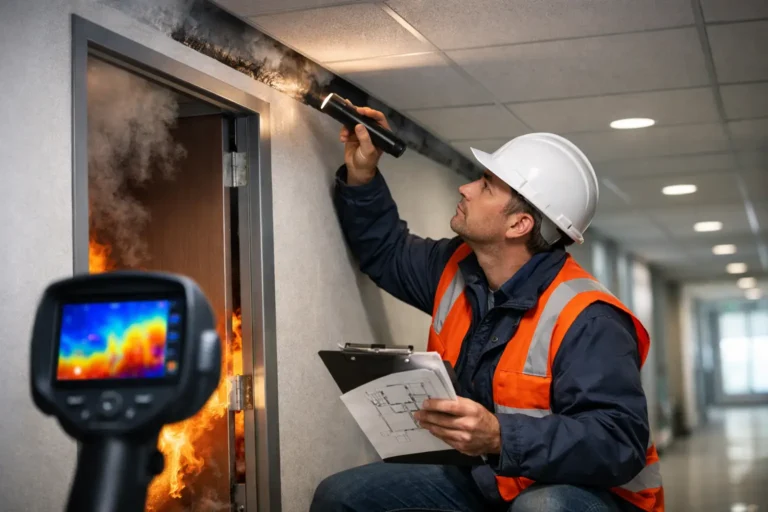
That matters because fire safety defects often sit behind surfaces, above ceilings and inside everyday operational habits. A fire door may look acceptable at a glance but fail on gaps, hardware, glazing, smoke seals or its ability to self-close. Fire stopping may appear present but be poorly installed, damaged by later works or entirely unsuitable for the service passing through the compartment line.
A contractor who is genuinely certified brings more than tools. They bring a method. Survey first. Record accurately. Prioritise risk. Rectify correctly. Sign off with evidence. That process protects occupants, but it also protects decision-makers who may later need to show they acted competently and without delay.
Why certification matters more than a low quote
When a building is under pressure to pass an inspection, there is a temptation to appoint whoever can attend quickly and offer a competitive price. Speed matters, but speed without competence creates a second problem. Poor remedial work can leave the original defect in place while adding cost, delay and false reassurance.
Certification matters because it helps demonstrate that the contractor has been assessed against recognised standards, works within defined competencies and understands the products, systems and installation requirements involved. In practical terms, that means fewer guesses on site and fewer weak points in your compliance record.
There is also the issue of defensibility. If a regulator, insurer or investigator asks who carried out the assessment or remedials, “a local contractor” is not a strong answer. A certified specialist gives you a far clearer line of assurance. It does not remove your responsibility as the duty holder, but it shows you took that responsibility seriously.
This is where many organisations get caught out. They assume that any builder can adjust a fire door or fill a penetration. Sometimes the work looks tidy and still fails. Fire safety products and assemblies depend on correct specification, compatible materials and proper installation. The trade-off is simple: a cheaper appointment may reduce the invoice today, but it can increase legal exposure tomorrow.
The risks of using a general contractor
A general contractor may be excellent at broad building works and still be the wrong fit for fire compliance. Fire safety is not just another maintenance line item. It is a life safety discipline with legal consequences.
The main risk is incomplete diagnosis. If the person assessing the issue does not understand compartmentation, door set performance or evidence requirements, they may only fix what is visible. That leaves hidden defects unresolved. In schools, care homes, hospitals and multi-occupancy residential buildings, that is not a minor oversight. It can compromise escape routes, increase smoke spread and expose vulnerable occupants to greater danger.
The second risk is weak documentation. Even where remedial work is carried out, many organisations are left with vague job sheets rather than a proper record of findings, works completed and compliance status. When scrutiny arrives, poor paperwork can be almost as damaging as poor workmanship.
The third risk is disruption. Contractors unfamiliar with regulated environments often underestimate access issues, resident sensitivities, safeguarding requirements or the need to phase works around live operations. A specialist plans for these pressures from the outset.
What to look for in a certified fire safety contractor
The right appointment should make your life easier, not more complicated. You should expect technical competence, but you should also expect clarity, urgency and a process that moves from problem to proof.
Look first at scope. Some providers inspect only. Others carry out work but offer limited reporting. The strongest option is an end-to-end service that can identify issues, explain priorities, complete remedials and provide documented sign-off. That reduces delay and avoids the common gap between survey findings and actual correction.
Look next at communication. If a contractor hides behind jargon, you may struggle to brief stakeholders or make timely decisions. A good specialist translates defects into operational and legal consequences. They tell you what is urgent, what can be planned and what evidence will be produced at the end.
Then consider responsiveness. In fire safety, waiting weeks for a survey or months for remedial action is rarely acceptable. That does not mean every issue requires panic, but it does mean competent providers understand urgency. They know that unresolved defects affect risk assessments, enforcement exposure and resident confidence.
Finally, check whether their work is built to withstand challenge. Can they show a structured survey approach, clear reporting, photographic evidence where relevant and certification that aligns with the works completed? If not, your compliance position may still be fragile.
Certified fire safety contractor services that reduce pressure
For most duty holders, the real value of a certified fire safety contractor is not the inspection alone. It is the reduction in uncertainty.
If a fire door assessment identifies non-compliance across multiple doors, you need to know which failures are critical, which can be repaired and which require replacement. If compartmentation surveys reveal breaches around services, you need confidence that the remedial fire stopping will be appropriate for the substrate, penetration type and required performance. If a previous inspection has already raised concerns, you need corrective action quickly and with a clear audit trail.
This is where specialist delivery changes the picture. Instead of juggling separate surveyors, contractors and paperwork, you work with one accountable team. They identify the gap, fix the gap and evidence the result. For busy estates teams, headteachers, housing managers and care operators, that saves time. More importantly, it reduces the risk of something being missed between handovers.
A provider such as FireBlocked365 is built around that pressure. The aim is not simply to point out defects. It is to take control of the issue, complete the right works quickly and help you face the next assessment with confidence rather than dread.
When you need specialist support urgently
Some scenarios demand immediate action. An enforcement notice, a poor inspection result, a serious near miss, a pending insurance review or concerns raised by residents can all place fire safety at the top of the agenda overnight.
In those moments, hesitation costs more than money. It affects trust. Boards want answers. Parents, tenants and families want reassurance. Staff want to know the building is safe. A certified fire safety contractor should be able to step into that pressure, identify what is wrong and create a realistic plan fast.
That plan should not overcomplicate matters. In most cases, you need three things: a clear picture of the defects, a prioritised programme of works and documented proof when those works are complete. Anything less leaves room for uncertainty, and uncertainty is exactly what duty holders cannot afford.
Choosing certainty over guesswork
Fire safety compliance becomes dangerous when it is treated as a patchwork of isolated tasks. A door adjusted here, a seal added there, a report filed away without follow-up. The building may look managed while the underlying risk remains.
A certified fire safety contractor brings discipline to that process. They help you move from assumption to evidence, from defects to corrective action, and from anxiety to a position you can defend. That is not just good practice. In regulated buildings, it is often the difference between passing scrutiny and facing very uncomfortable questions.
If you are carrying the responsibility for occupants, staff or residents, do not settle for vague assurances. Get the building checked properly, get the defects fixed properly, and make sure the proof is there when it matters most.