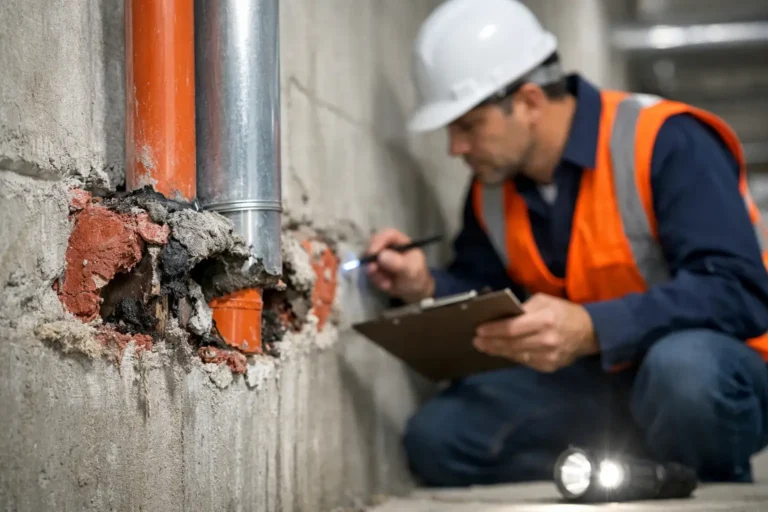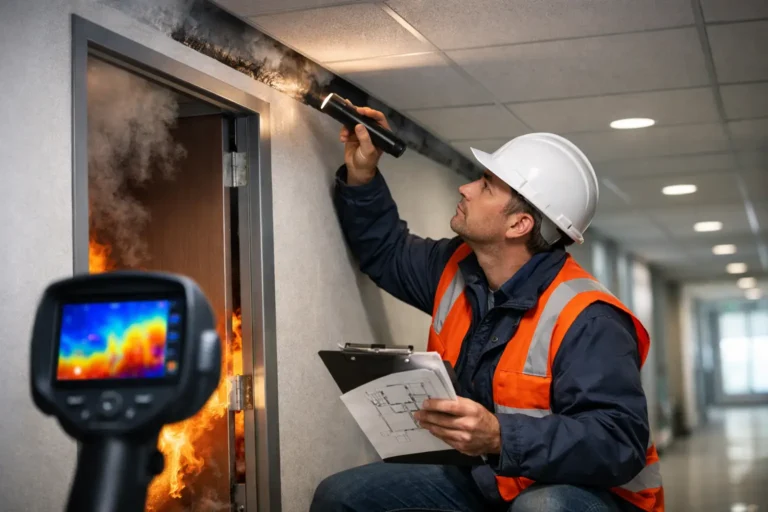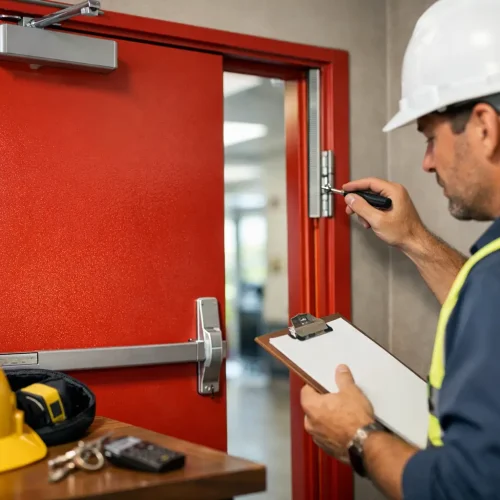
A failed fire door inspection rarely fails on just one point. More often, it is a mix of issues – excessive gaps, damaged seals, poor ironmongery, missing signage, warped leaves or frames that no longer perform as intended. That is why one of the first questions duty holders ask is how much does fire door remedial work cost, and the honest answer is this: it depends on what has failed, how many doors are affected, and whether repair is still a safe and compliant option.
For landlords, housing providers, school estates teams, care operators and commercial building managers, cost matters. But cost on its own is the wrong lens. The real financial risk is not simply the invoice for remedial works. It is the cost of delay, repeat failures, enforcement attention, insurance pressure and occupants being placed at risk while defects remain unresolved.
How much does fire door remedial work cost in practice?
In practice, fire door remedial costs can range from relatively modest adjustments on a single door to significant multi-door programmes across an occupied building. Minor works such as easing and realigning a door, replacing smoke seals, adjusting a closer or fitting compliant signage may sit at the lower end. More involved remedials, such as replacing ironmongery, correcting frame issues, installing over-panels, dealing with glazing defects or carrying out partial leaf and frame corrections, quickly move the cost upward.
Where a door is too badly damaged, poorly installed, or lacks evidence that it can achieve the required fire performance, replacement may be the only defensible route. At that point, the cost picture changes from remedial work to full door set replacement, along with associated making-good, decoration and access coordination.
That is why there is no serious one-size-fits-all figure. A compliant answer requires inspection first, then a clear schedule of works linked to each defect.
What actually drives the price?
The biggest factor is the severity of the defects. A door with a few isolated issues is very different from a door set that has failed across multiple compliance points. If the closer is wrong, the hinges are unsuitable, the gaps are out of tolerance and the intumescent seals are missing, the labour and materials stack up quickly.
The second major factor is whether the existing door can legally and practically be repaired. Some doors are good candidates for remedial work because the core structure is sound and defects are limited to components or adjustment. Others have been altered so heavily, damaged so badly or installed so poorly that repair becomes false economy.
Scale also matters. If you need work to two or three doors, unit costs are often higher because mobilisation, access arrangements and certification time are spread across fewer items. If you are managing a block, school or care setting with dozens of doors requiring similar corrections, there is usually more efficiency in surveying, scheduling and completing the works in phases.
Access conditions have a direct effect too. An empty corridor in a commercial building is simpler than a live care home wing, an occupied residential block or a school operating around safeguarding and movement controls. Out-of-hours working, resident liaison, asbestos considerations, parking restrictions and permit requirements all push costs upward.
Repair or replacement – where the cost line usually sits
This is where many budgets are won or lost. Decision-makers understandably hope every failed door can be repaired. Sometimes that is possible, and sensible. Sometimes it is not.
Repair tends to make financial sense when the leaf and frame are fundamentally sound, certification evidence is available or the door can otherwise be justified, and the defects relate to serviceable components or tolerances. In those cases, targeted remedial work can restore performance without the disruption of a full replacement.
Replacement tends to be the safer route when there is severe damage, significant distortion, incompatible components, uncertain provenance, or a long list of interdependent failures. Paying repeatedly to patch a door that still may not pass scrutiny is rarely a saving. It often creates more delay, more disruption and a more difficult conversation with assessors, insurers or enforcing bodies.
A specialist contractor should be able to tell you, plainly, when repair remains viable and when replacement is the only credible option.
How much does fire door remedial work cost for common defects?
The cost is usually built from labour, compliant materials, access planning and final documentation. Common defects that increase pricing include failed self-closing action, excessive perimeter gaps, worn or missing intumescent seals, incorrect hinges, damaged latch hardware, non-compliant glazing details and poor frame condition.
Some of these are straightforward to resolve in isolation. Others are linked. For example, correcting a closing issue may expose problems with hinges, latch alignment and smoke seal compression. What looked like a quick adjustment can become a more involved repair once the door is properly tested and reset.
This is why low headline quotes should be treated carefully. If pricing is offered without a competent inspection, or without a defect-by-defect scope, it may not reflect what is really required to achieve compliance.
The hidden costs most building managers miss
The visible cost is the remedial invoice. The hidden costs are usually far more damaging.
One is repeat attendance. If defects are identified poorly at survey stage, contractors return multiple times, residents are disturbed again, rooms go out of use again, and management time disappears into coordination. Another is failed follow-up assessment. If the work is not completed to the right standard, you pay twice – once for the remedials and again for rework.
There is also the cost of delay. In regulated or higher-risk settings, unresolved fire door issues can affect fire risk assessments, internal compliance reporting, insurer confidence and audit outcomes. For care homes, hospitals, schools and multi-occupied residential buildings, that delay carries operational and reputational consequences well beyond the works cost itself.
Then there is legal exposure. If a known defect is left unresolved after identification, the cost conversation changes completely. At that point, the issue is no longer just maintenance. It becomes a matter of duty, evidence and accountability.
Why quotes vary so widely between contractors
Because not every contractor is pricing the same thing.
A general joinery quote may only cover visible carpentry adjustments. A specialist fire door remedial quote should account for compliance-critical components, suitability of replacement parts, tolerances, fire stopping interfaces where relevant, test evidence considerations, and documented completion. Those are not cosmetic extras. They are the difference between a door that looks better and a door that can stand up to scrutiny.
This is also why the cheapest quote can become the most expensive decision. If the work is not properly specified, if unsuitable products are fitted, or if there is no credible documentation at the end, the building remains exposed.
For duty holders under pressure, certainty has value. Clear reporting, competent remedial work and reliable sign-off reduce the risk of finding yourself back at the same door defects three months later.
How to budget properly for fire door remedials
Start with a competent inspection, not a guess. A proper assessment should tell you which doors can be repaired, which require replacement, what defects exist, and what priority each item carries. Without that, budgeting is little more than optimistic forecasting.
Next, separate urgent life-safety issues from planned corrective works. Some defects need immediate action because they undermine compartmentation or escape protection. Others can be scheduled into a structured programme to reduce disruption and manage spend.
It also helps to budget by building area, risk level and door type rather than treating every opening the same. A flat entrance door, a stair core door and a riser cupboard door may all sit in the same report, but the compliance implications and remedial approach are not identical.
If you are managing a larger estate, phased works often make the most sense. That lets you deal with the highest-risk failures first while maintaining control of cash flow and access arrangements.
What a good provider should give you
You should expect more than a price. You should receive a clear explanation of what has failed, whether remedial work is suitable, what products or components will be used, how the building will remain operational during works, and what evidence you will hold at the end.
That is especially important if you are answerable to trustees, governors, board members, residents, insurers or regulators. You need a paper trail that shows defects were identified, actioned and closed out properly. Businesses such as FireBlocked365 are brought in for exactly that reason – not simply to fix doors, but to remove uncertainty and put the compliance position back under control.
If you are asking how much does fire door remedial work cost, you are really asking a bigger question: what will it take to make this building safe, compliant and defensible? The right answer is never the fastest guess. It is the one backed by competent inspection, practical remedial work and documentation you can rely on when scrutiny arrives.
The most useful next step is not chasing the lowest number. It is getting clarity on the doors you have, the defects you are carrying, and how quickly those risks can be closed before they become more expensive in every sense.