A fire door that looks fine at a glance can still fail when it matters. A gap that is too wide, a damaged seal, the wrong closer, a letter plate that should never have been fitted – these are the kind of defects that turn a compliant-looking building into a serious liability. So, do landlords need fire door surveys? In many cases, yes. If you are responsible for a building where fire doors form part of the fire safety strategy, relying on assumptions is a risk most landlords cannot afford.
Do landlords need fire door surveys under UK law?
The short answer is that the law does not usually say a landlord must hold a document called a “fire door survey” for every property. What the law does require is far more important. If you are the responsible person or duty holder for a relevant building, you must assess fire risk, maintain fire precautions, and make sure fire doors are fit for purpose.
That is where surveys come in. A proper fire door survey is often the clearest, safest way to prove that fire doors have been checked by a competent specialist, that defects have been identified, and that remedial action has been planned or completed. In practice, that makes surveys difficult to avoid in many multi-occupied, higher-risk, or regulated premises.
For landlords, the real question is not whether the phrase itself appears in legislation. It is whether you can confidently show that your fire doors have been properly assessed, maintained, and documented. If the answer is no, your exposure is already higher than it should be.
When a landlord is most likely to need a fire door survey
It depends on the type of property and who is using it. A single buy-to-let house occupied by one household is not the same as a block of flats, an HMO, supported housing, or mixed-use premises with shared escape routes. The more complex the building, the stronger the case for a dedicated survey.
Landlords are most likely to need fire door surveys where there are communal areas, flat entrance doors, shared stairwells, protected corridors, plant rooms, risers, or any other doors that are expected to resist the spread of fire and smoke. If residents, visitors, staff, or contractors rely on those doors to keep escape routes tenable, the doors need more than a casual visual check.
Surveys are also especially relevant if your building falls within tighter fire safety duties, has previously failed a fire risk assessment, has undergone refurbishment, or has a history of ad hoc repairs. Fire doors are commonly altered over time. Hinges get changed, closers are removed, glazing is replaced, and doors are planed down to stop them sticking. Small changes can destroy performance.
A fire risk assessment is not always enough
This is where many landlords get caught out. They assume the fire risk assessment covers everything in enough detail. Sometimes it does not.
A fire risk assessment reviews the overall fire risks in the building. It may identify concerns around compartmentation and fire doors, but it is not always a full technical inspection of each individual door set. Much depends on who carried it out, the scope, access, and how deeply they investigated.
If a fire risk assessor notes that fire doors require specialist review, that is your warning sign. If they record broad concerns such as poor condition, missing seals, excessive gaps, uncertain certification, or damaged frames, a dedicated fire door survey is often the next step. Waiting until enforcement action or a serious incident forces the issue is the expensive version of the same process.
What a fire door survey actually checks
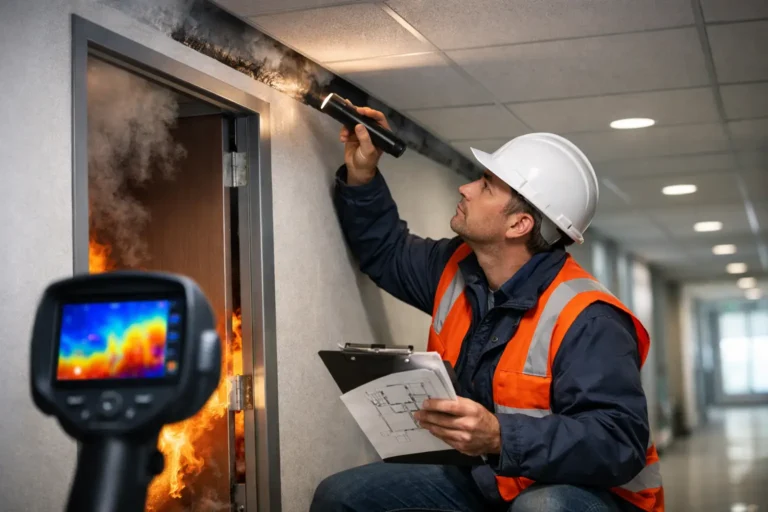
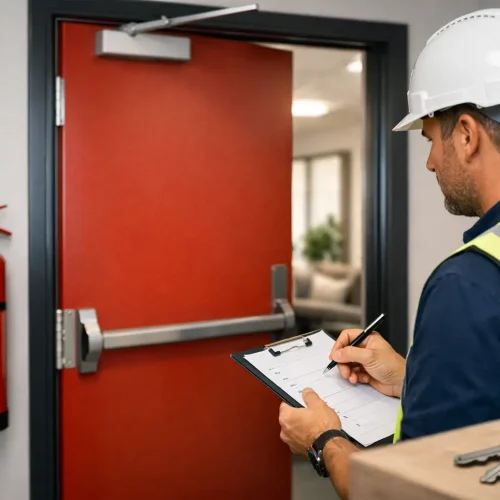
A proper survey is not a clipboard exercise. It examines whether each door set is capable of doing the job it is supposed to do.
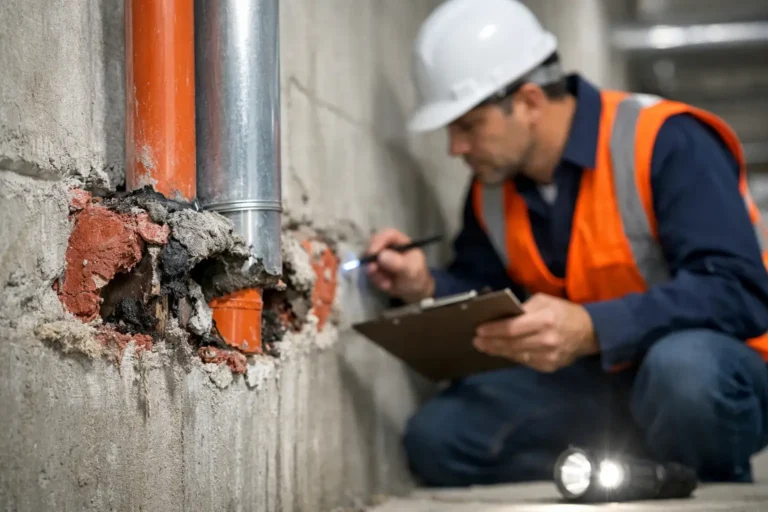
That includes the condition of the leaf and frame, the size of perimeter gaps, hinges, self-closing devices, latches, smoke seals, intumescent seals, glazing, ironmongery, signage, threshold detail, and evidence of non-compliant alterations. It also considers whether the door is suitable for its location and whether previous repairs have compromised performance.
Just as important, the findings should be documented clearly. Landlords need more than a list of faults. They need a record they can act on – what is defective, how serious it is, which doors present the highest risk, and whether repair is possible or replacement is the safer route.
Why surveys matter for landlords beyond legal wording
The legal issue matters, but it is not the only one. Fire door surveys protect landlords in four practical ways.
First, they reduce life safety risk. Fire doors buy time. They protect escape routes, limit smoke spread, and help contain a fire to the area of origin. When they fail, evacuation becomes harder and the consequences become far more serious.
Second, they reduce enforcement risk. If a regulator, local authority, housing body, or fire and rescue service asks what checks have been carried out, vague answers are a problem. A documented survey shows control, not guesswork.
Third, they reduce financial exposure. Defective fire doors can affect insurance positions, trigger urgent unplanned works, and create expensive knock-on failures when a broader inspection uncovers systemic defects.
Fourth, they protect reputation. Residents and managing agents expect visible competence. If occupants report doors slamming badly, not closing, or being obviously damaged, and nothing has been done, confidence falls quickly.
The buildings where fire door surveys are hardest to avoid
Some landlords can take a more proportionate approach, especially in lower-risk settings. But in certain properties, surveys are close to essential.
Blocks of flats are the clearest example, particularly where communal corridors and stair cores depend on effective compartmentation. HMOs are another high-risk area because multiple occupants, shared facilities, and frequent wear can all increase the chance of defects going unnoticed. Supported living, care environments, and student accommodation also demand close attention because evacuation may be more complex and occupancy is often denser.
Commercial landlords with multi-let premises face similar pressure. Where several tenants share escape routes or where fire doors protect risers, service cupboards, and circulation spaces, the duty to maintain them properly is difficult to argue away.
What happens if landlords do not get fire doors checked?
The risk is not just theoretical. Poor fire door maintenance is one of the most common compliance failures found during inspections. The result may be improvement notices, enforcement action, failed assessments, urgent remedial costs, or serious scrutiny after an incident.
Even without formal action, landlords can end up in a weak position. If a tenant complaint, insurance query, sale process, or managing agent review exposes missing evidence around fire door condition, you are then reacting under pressure. That usually means slower decisions, higher costs, and greater disruption.
A planned survey is always more manageable than a rushed response after defects have already become a liability.
How often should fire door surveys be carried out?
There is no one-size-fits-all answer. Frequency depends on the building, occupancy, condition, and the level of use the doors receive.
In higher-risk or heavily used premises, more regular inspections are sensible and often expected. In lower-risk settings, surveys may be scheduled as part of a wider compliance programme, with additional checks after refurbishment, tenant damage, or changes in use. The key point is that fire doors should not be treated as fit-and-forget items.
If you already know some doors are aging, altered, or frequently repaired, the case for a full survey becomes stronger. Buildings with no reliable records are also prime candidates. Uncertainty itself is a warning sign.
What landlords should do next
If you are asking do landlords need fire door surveys, you are already dealing with the right issue. The next step is to stop treating fire doors as a minor maintenance item and start treating them as a critical compliance control.
Review what evidence you currently hold. If your only comfort is an old fire risk assessment, a few maintenance notes, or assumptions about how the doors were originally installed, that is not strong enough. You need a clear picture of condition, compliance, and any remedial works required.
This is where a specialist matters. A detailed survey identifies hidden failures, prioritises risk, and gives you a practical route to correction rather than a vague warning. For landlords under pressure from residents, managing agents, or upcoming assessments, that clarity is what turns a compliance headache into a controlled plan. FireBlocked365 works in exactly that space – finding the problem, fixing it properly, and helping duty holders stand up to scrutiny with confidence.
The safest approach is simple: if fire doors protect your building, get them checked before someone else checks them for you.